Resources
Featured
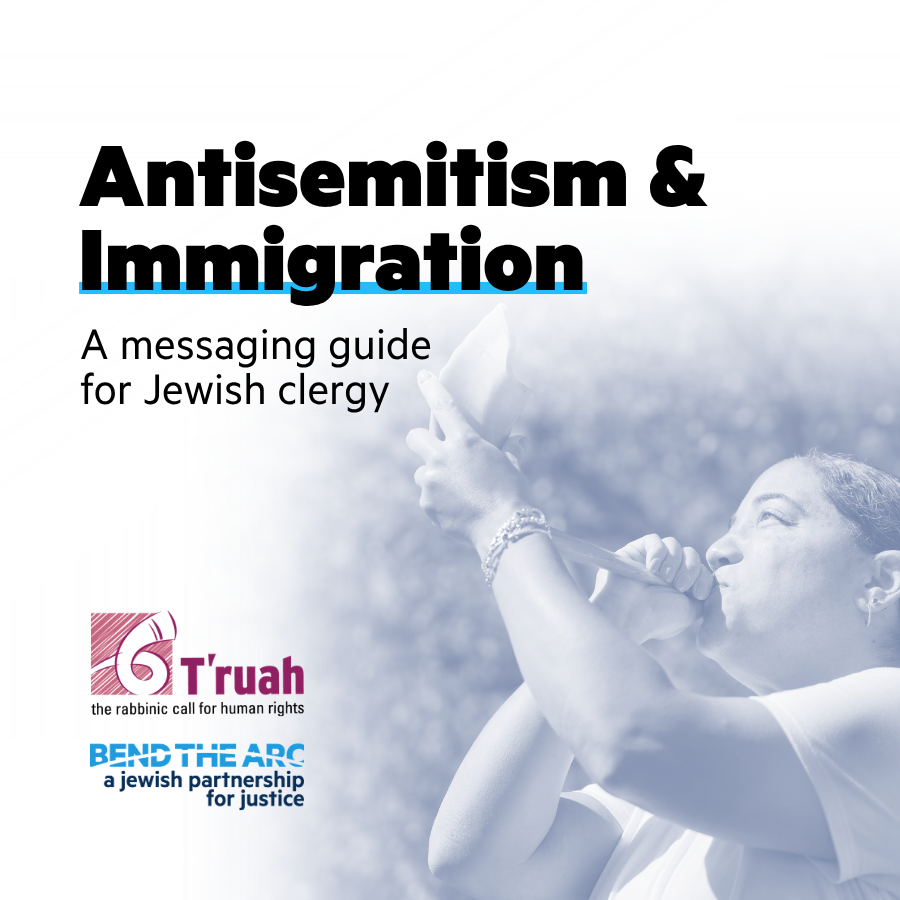
Antisemitism & Immigration: A Messaging Guide for Jewish Clergy
When the fight against antisemitism is used to harm immigrants, rabbis and cantors can be powerful voices to describe what’s at play and advocate for and inspire action towards our shared safety.

T’ruah: 2026 Poll Worker Recruitment Toolkit
Our toolkit enables you to recruit people in your community to sign up to become a poll worker.
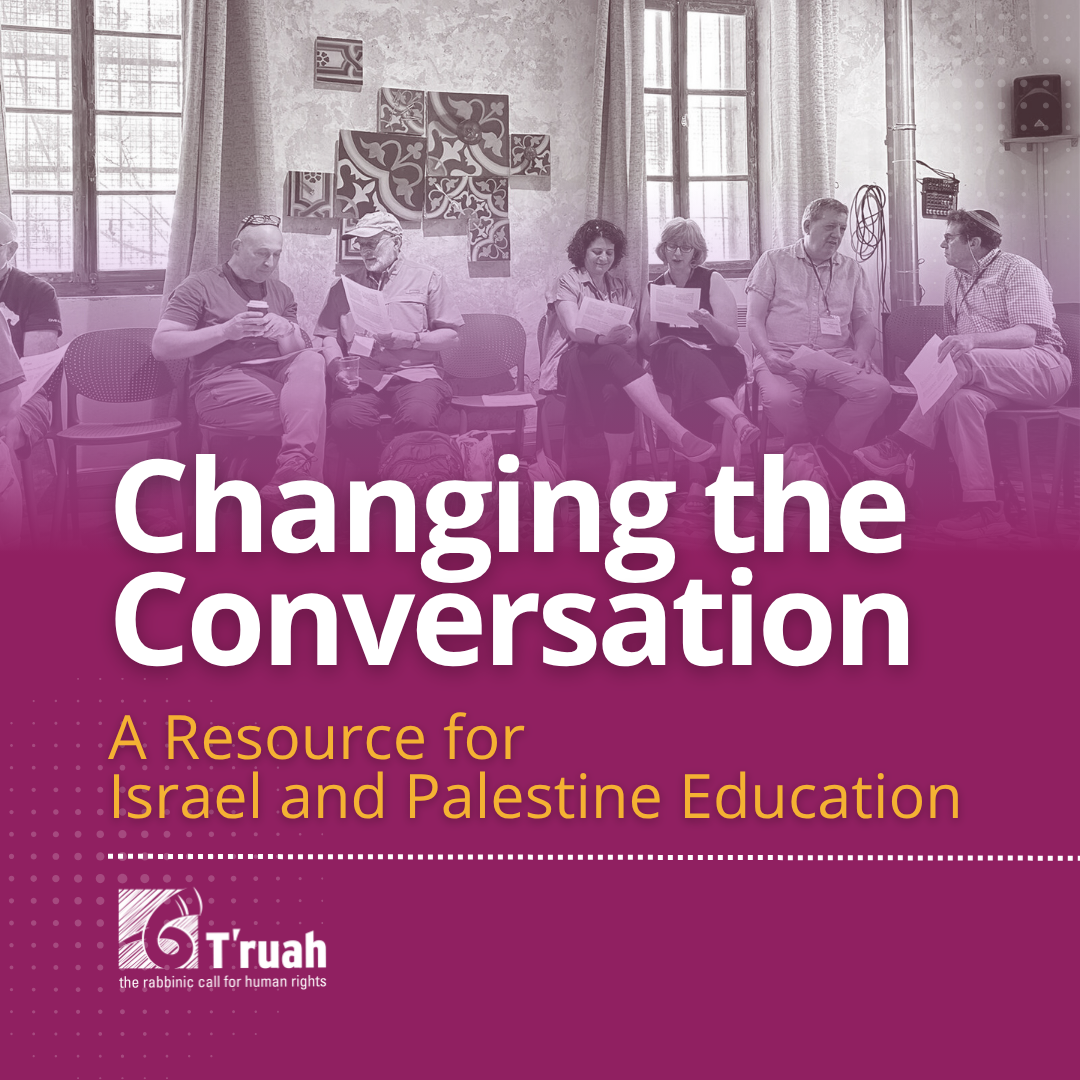
Download Changing the Conversation: A Resource for Israel and Palestine Education
An entry point for Jewish communities to engage with Israel and Palestine with depth, nuance, and care.


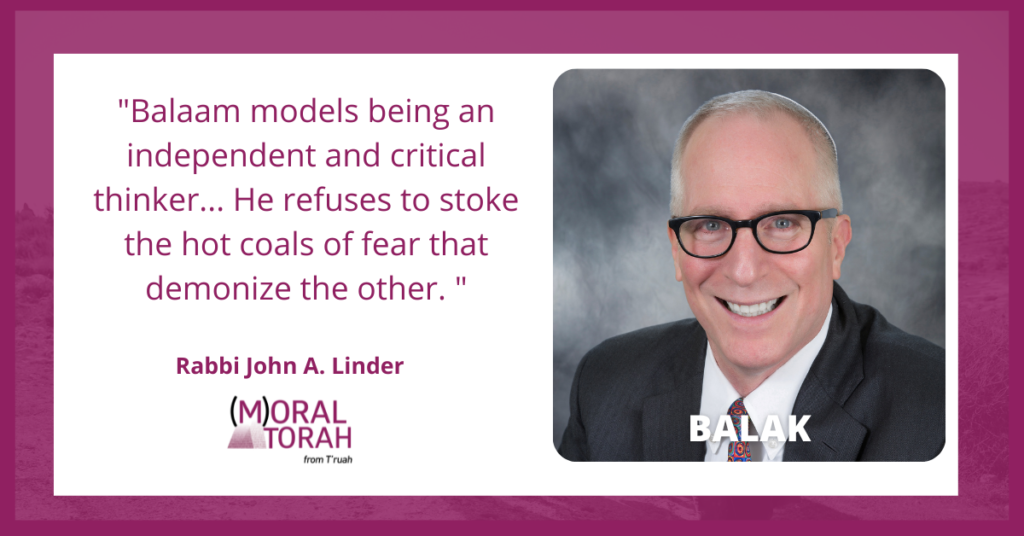
The Power of Bearing Witness
Balaam models being an independent and critical thinker... He refuses to stoke the hot coals of fear that demonize the other.
more
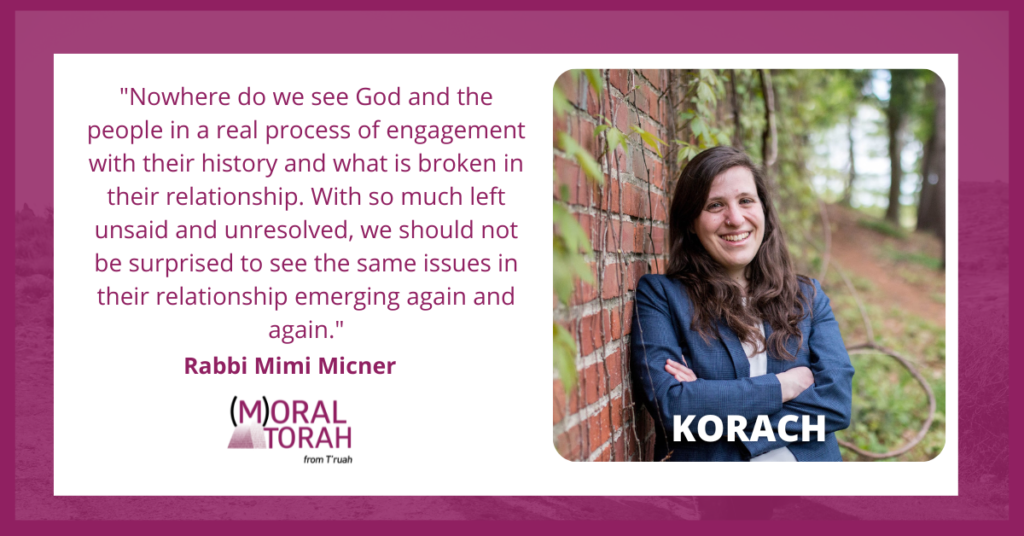
Transformation Will Only Come Through Honesty About Our Past
Nowhere do we see God and the people in a real process of engagement with their history and what is broken in their relationship. With so much left unsaid and unresolved, we should not be surprised to see the same issues in their relationship emerging again and again.
more
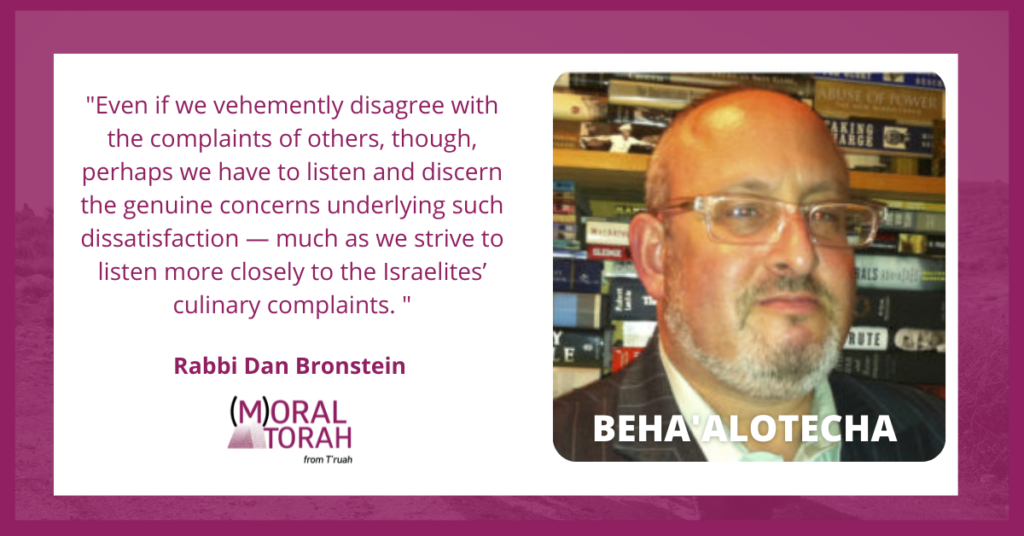
Stopping to Listen to Complaints
Even if we vehemently disagree with the complaints of others, though, perhaps we have to listen and discern the genuine concerns underlying such dissatisfaction — much as we strive to listen more closely to the Israelites’ culinary complaints.
more
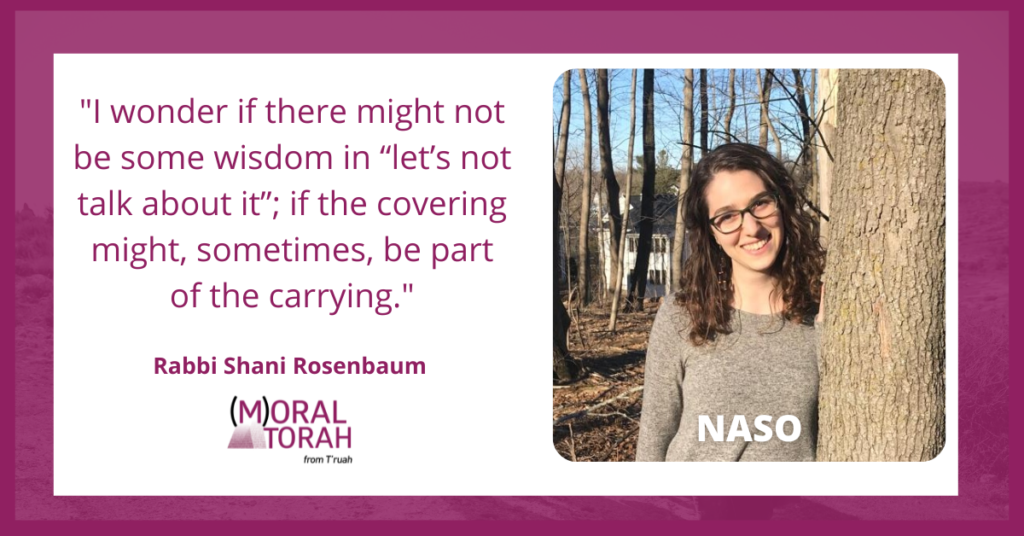
The Art of Burden-Bearing
I wonder if there might not be some wisdom in “let’s not talk about it”; if the covering might, sometimes, be part of the carrying.
more
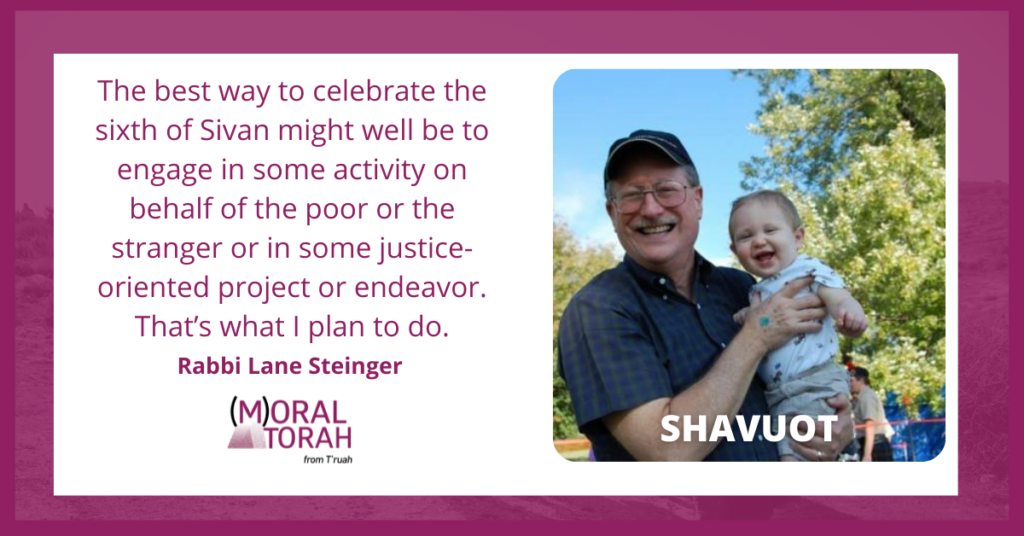
What Does Shavuot Have to Do With Justice?
The best way to celebrate the sixth of Sivan might well be to engage in some activity on behalf of the poor or the stranger or in some justice-oriented project or endeavor. That’s what I plan to do.
more
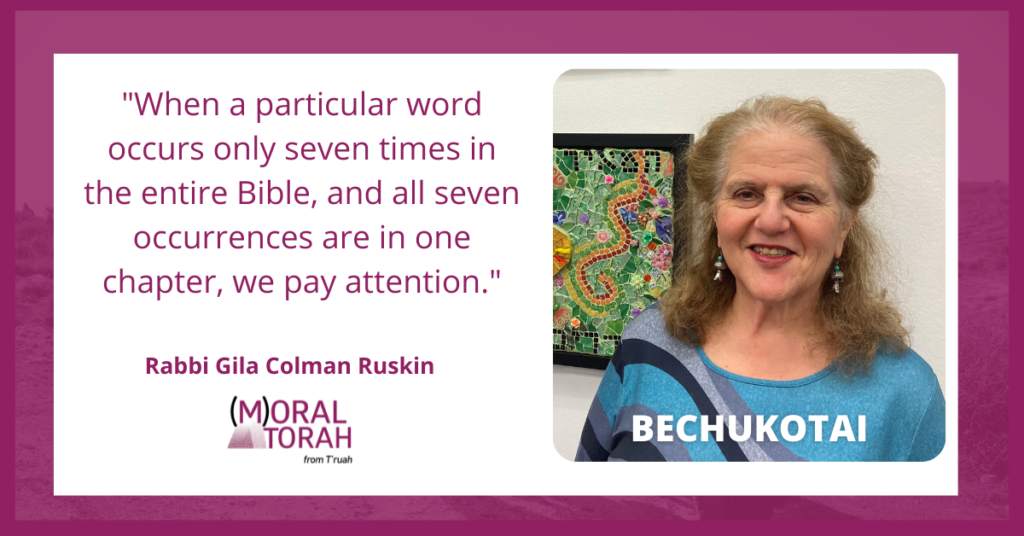
Not Just Chance: Intentional Choice
When a particular word occurs only seven times in the entire Bible, and all seven occurrences are in one chapter, we pay attention.
more
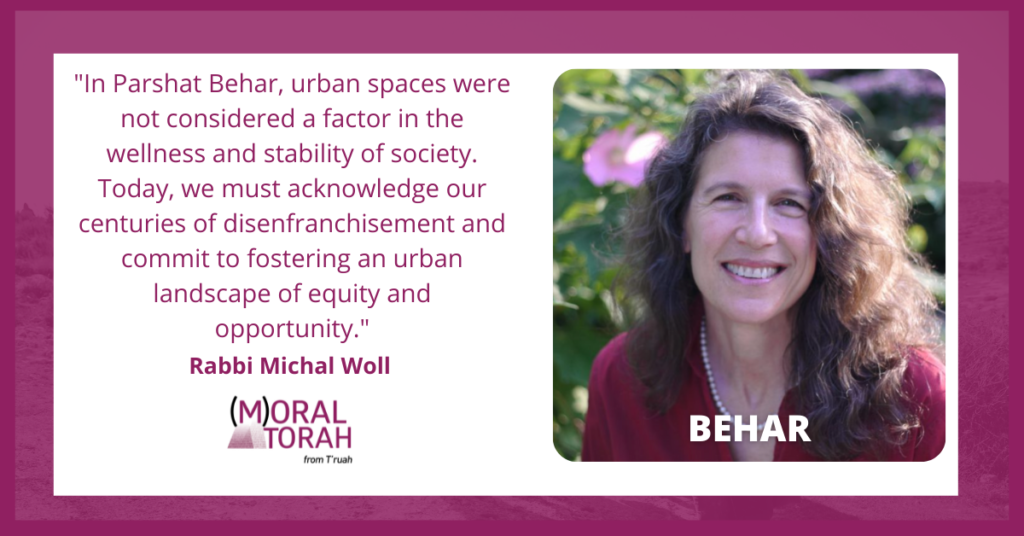
Fostering an Equitable Urban Landscape
In Parshat Behar, urban spaces were not considered a factor in the wellness and stability of society. Today, we must acknowledge our centuries of disenfranchisement and commit to fostering an urban landscape of equity and opportunity.
more
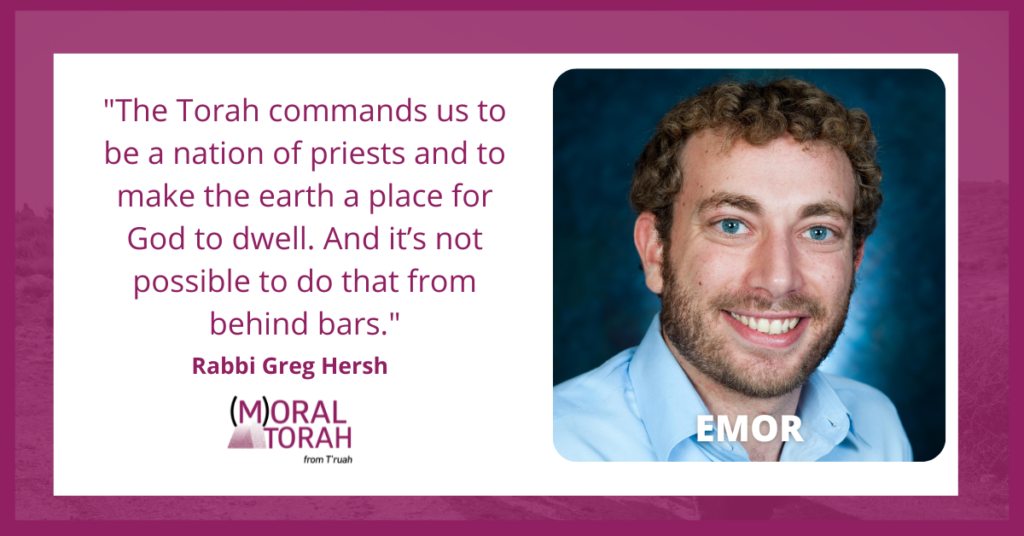
Why is the Torah So Silent About Prisons?
The Torah commands us to be a nation of priests and to make the earth a place for God to dwell. And it’s not possible to do that from behind bars.
more
The Essence of Being a Jew
That’s Kedoshim’s point – that those of us who own land (and its modern equivalent, a bank account) have an undeniable responsibility to support those who don’t.
more
Awakening the World With Love
‘I was asleep, but my heart was wakeful.’ The first part of this verse is a call. ...Within myself there is something to be awakened.
more