Parshat Naso contains one of the Torah’s most psychologically demanding mitzvot:
Speak to the Israelites: When men or women individually commit any wrong toward a fellow human being, thus breaking faith with Hashem, and they realize their guilt, they shall confess the wrong that they have done… (Bamidbar 5:6-7)
These simple words contain a demanding vision of moral and spiritual responsibility. When we wrong someone, we are commanded to confess what we have done wrong, and as the verse goes on to say, do what we can to make restitution for the harm we have caused.
The “Sefer haChinuch” (13th Century Spain) details what this confession should look like:
We are commanded to confess before G!d our sins that we have sinned, at such time that we feel remorse for them. And this is the content of confession: ‘Please, G!d, I have sinned, I have transgressed, I have rebelled [in] such and such a way,’ meaning to say that he should mention the sin that he did explicitly with his mouth. (Mitzvah 364)
The “Chinuch” emphasizes that confession must be concrete. One must name the wrongdoing explicitly rather than vaguely reference one’s imperfection.
Find more resources on Naso.
We live in a culture deeply invested in avoiding responsibility. Public figures, corporations, and institutions routinely evade accountability while rewarding image management over repentance. Even conversations about accountability often become arguments about reputation, punishment, or public image rather than genuine repentance. This kind of public culture cannot possibly avoid affecting our experience of the world and ourselves. How many of us see a total refusal to accept ethical responsibility from virtually every corner of society, with the power to avoid being forced to do so, and begin to doubt that we live in a world where such things can even happen? It is precisely in such a world that the Torah’s vision of confession becomes most powerful.
The “Sefer haChinuch” goes on to say that the spiritual roots of the mitzvah are bound up with the physical act of saying our shortcomings aloud:
Through the verbal admission of iniquity, the sinner reveals his thoughts and opinions: that he truly believes that all his deeds are revealed and known before God, blessed be He, and that he will not act as if ‘the Eye that sees’ does not see. Furthermore, through mentioning the sin specifically, and through his remorse about it, he will be more careful about it on another occasion, not to stumble in the same way again.
Not just feeling guilt in our hearts, but actually saying to ourselves and to Hashem, “I have fallen short in this specific way, and I know that You know. Please help me find my way back”. For the “Chinuch,” verbal confession has a double power. Acknowledging our faults aloud affirms that we stand transparently before Hashem. At the same time, confession becomes a practice of spiritual formation, habituating us toward greater honesty and responsibility.
Sign up to receive (M)oral Torah in your inbox each week.
Our society fears accepting responsibility, in part, because we fear both consequences and admitting weakness and deficiency. To take responsibility is to make oneself vulnerable to criticism, to rejection, to rebuke. Refusing to confess and bear the weight of our mistakes allows us to hold a false self-confidence, rooted in a refusal to love ourselves as we are.
The “Sefer haChinuch” cryptically concludes this section of his commentary on the commandment to confess by saying that through verbal confession, we will become desired by Hashem. I think this “reward” means that Hashem does not desire a polished or fictional version of ourselves — an image untouched by failure. Hashem desires the selves Hashem actually created. That is why the “Chinuch” says that not confessing is like saying that “the Eye that sees does not see,” pretending to a G!d who loves us as we are that we are something else. The joy of confession is knowing that we deserve to be loved for who we are, not who we are able to present ourselves as. May we become brave enough to confess before the One who already knows, and to build communities capable of facing their failures with honesty and courage.
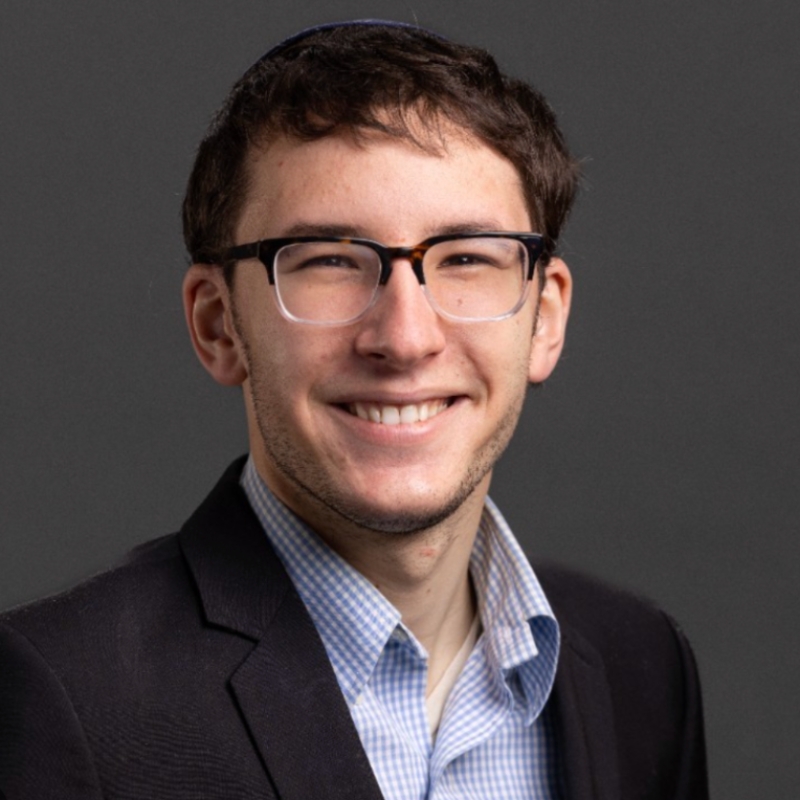
Rabbi Jonah Winer (he/him) is T’ruah’s director of learning. He was born and raised in Toronto and, after earning a BA in Religious Studies at McGill University, was ordained by Yeshivat Chovevei Torah in New York. While there, he worked as a Rabbinic Intern at NYU’s Bronfman Center and the Kehillah of Riverdale. After ordination, he spent three years working at Hillels, most recently as Senior Jewish Educator and Orthodox Rabbi at Brown RISD Hillel.