
Just days before Pesach, the Israeli Knesset passed a law that would enforce the death penalty by hanging for Palestinians convicted of deadly attacks. Legal experts believe that the law is written in such a way that it would make it nearly impossible to ever apply to Jewish extremists accused of similar crimes. Despite knowing for weeks that this government would likely succeed in passing this racist, discriminatory, and morally reprehensible legislation, when I received the news, I still found myself in a state of gutwrenching shock. For anyone to claim that such a law is representative of Judaism is not only disgraceful, it is a chillul Hashem — a desecration of the Divine.
Find more resources on Tazria-Metzora.
This week in our double parshah of Tazria-Metzora, we read about tzara’at, a plague of leprosy that can affect one’s body, clothing, or home. We read that when an Israelite encounters tzara’at in their home, they are to approach the Kohen (Hebrew priest) and say, “Something like a plague has appeared on my house.” (Leviticus 14:35) The Or HaChaim asks,
Why did the Torah not write that the owner says ‘plague,’ but rather as saying ‘something like a plague’? The answer is that the letter kaf (meaning ‘like’) teaches that even if the owner is very learned, and he has no doubt that the symptoms he has found are those of the tzara’at plague, he must not take it upon himself to pronounce judgment.
This little kaf is there to remind us of the sanctity of humility — to recognize that as human beings we do not have the right to pass judgment; that is only reserved for the Divine.
As I read the Or HaChaim’s commentary, I was reminded of our sages’ discussion of the death penalty in Masekhet Makkot. Despite capital punishment’s presence in the Torah, our rabbis felt deeply uncomfortable with carrying out any sentencing that did not, above all, preserve the sanctity of human life. In the opening chapter of Mishnah Makkot we read,
The Sanhedrin (the supreme court of ancient Israel) that puts to death one person in seven years is termed tyrannical. Rabbi Eleazar Ben Azariah says, ‘One person in 70 years.’ Rabbi Tarffon and Rabbi Akiba say, ‘If we had been in the Sanhedrin, no one would have ever been put to death.’ (Mishnah Makkot 1:10)
Despite a halakhic system that in theory had space for capital punishment, our rabbis were unequivocally clear — the death penalty has no place in our Jewish tradition.
In her reflections on this parshah, my teacher Rav Aviva Richman has her own thoughts about this letter kaf. She explains that the mitzvah around the tzara’at does not take place when the Kohen weighs in about how to eradicate it, but rather when the owner of the home reaches out to the Kohen in the first place. She explains that halakhah is an opportunity to create a bridge between our lives and Divine will. In order to do so, we must be able to identify when something “like” a plague has affected us, but also to recognize when there are limits to our own perspective. It is in these moments that we must trust that feeling in our kishkes that says, this is not the will of the Divine, this is not how we treat any human being created b’tzelem Elohim — in the Divine Image.
B’ezrat Hashem, with God’s help, this disgraceful bill will be overturned by the Israeli Supreme Court. But as we continue on this seven-week journey toward celebrating revelation at Sinai, may we, and those who claim to represent us, have the humility to utilize that little kaf, and not declare anything in absolute terms. May we continue to fight to purify ourselves of this Kahanist tzara’at that is deeply afflicting the sanctity of our tradition. And may the divinity in all human beings be fought for, preserved, and maintained for all who live in the land, for all who are created in the image of G-d.
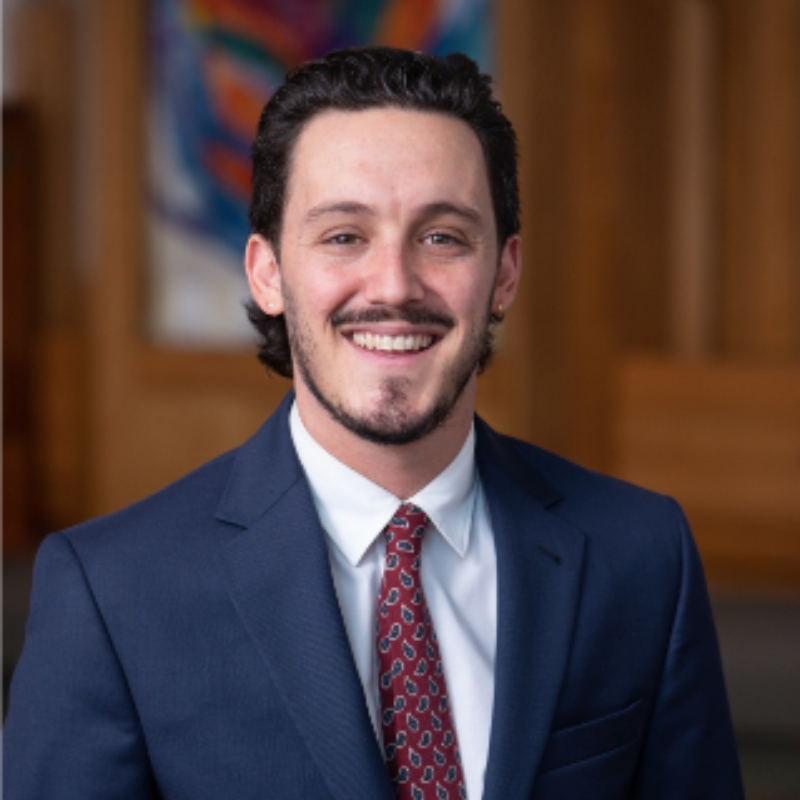
Rabbi Aaron Leven is the associate rabbi at Nefesh in Los Angeles, CA. He is a proud alum of the Jewish Theological Seminary, the BJ Rabbinic Fellowship, Avodah’s Service Corps, and the T’ruah Israel Fellowship. A native Angeleno, he is grateful to be back on the West Coast with his wife after several years making New York City their home.