
Resources
Featured
Antisemitism & Immigration: A Messaging Guide for Jewish Clergy
When the fight against antisemitism is used to harm immigrants, rabbis and cantors can be powerful voices to describe what’s at play and advocate for and inspire action towards our shared safety.

T’ruah: 2026 Poll Worker Recruitment Toolkit
Our toolkit enables you to recruit people in your community to sign up to become a poll worker.
Download Changing the Conversation: A Resource for Israel and Palestine Education
An entry point for Jewish communities to engage with Israel and Palestine with depth, nuance, and care.




Behar-Bechukotai: Taking Back Our Streets and the Meaning of Jubilee
Rabbi Doug Alpert on the promise of the jubilee year.
more

Behar – Bechukotai: Abolish the Minimum Wage
We live in a privileged society. The Torah teaches that God judges us on how we meet our societal responsibility to provide for the most vulnerable people within our society. While we enjoy the blessings [of our privilege], we fail to meet the responsibility.
more

Behar: Getting from Here to There
We are returning from the mountain to the plains; from our highest ideals to the practicalities of daily living; from the most fundamental expression of holiness to where we are now.
more

Behar-Bechukotai: Proclaiming Dror Throughout the Land
...modern American politics have alienated the word dror from the Jewish concept of liberty.
more
Fostering an Equitable Urban Landscape
In Parshat Behar, urban spaces were not considered a factor in the wellness and stability of society. Today, we must acknowledge our centuries of disenfranchisement and commit to fostering an urban landscape of equity and opportunity.
more
Migrants on God’s Land
That’s how I found myself chanting and marching, yelling to children that they were not forgotten, that they were loved – while holding the hand of my youngest son, whom I love so much it hurts. Having a child is like letting your heart walk around outside of your body.
more
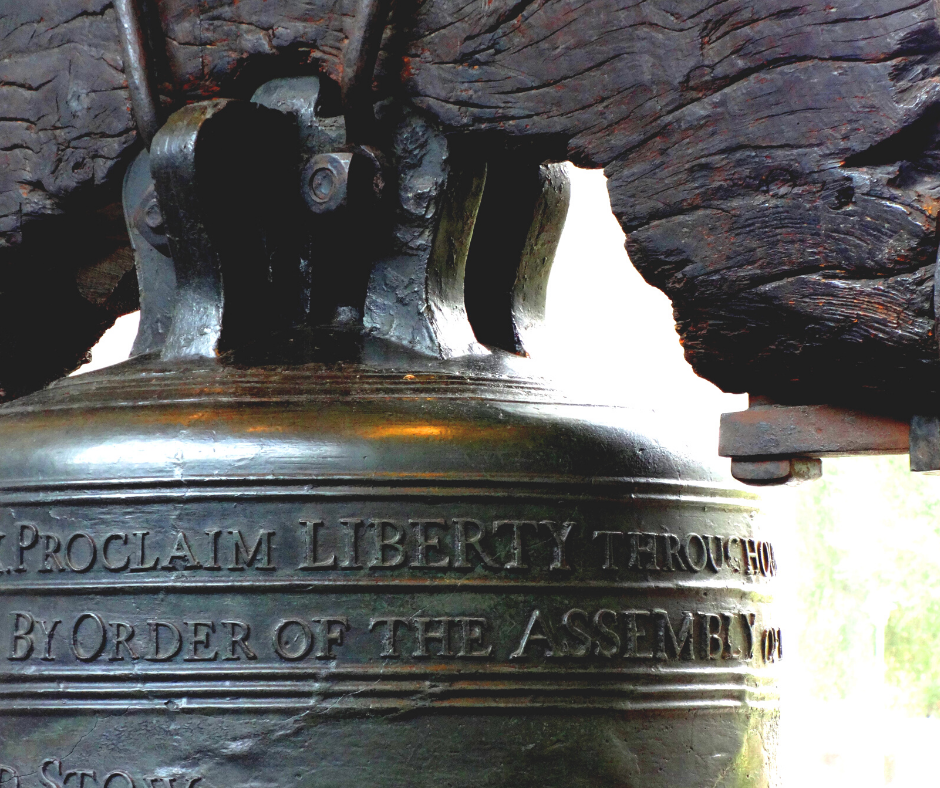
It’s Not Enough to “Proclaim Liberty.” We Have to Do the Work.
In this d'var Torah for Behar-Bechukotai, Rabbi Sally Priesand draws connections between the Liberty Bell and other symbols and ensuring liberty in civic life.
more
Justice for the Land and Its Inhabitants
Commentary on Parshat Behar (Leviticus 25:1 – 26:2) In Leviticus 25, the Torah famously explains the practice of the sabbatical year (shmitah) and the jubilee year (yovel), in which those who work the land refrain from farming in order to let the land rest. It’s not hard to see a connection between the ancient practice...
more
A Yovel for the Poor People’s Campaign (Parshat Behar/Bechukotai)
Commentary on Parshat Behar/Bechukotai (Leviticus 25:1 – 27:34) One week from today, Monday May 14, the Poor People’s Campaign: A National Call for Moral Revival will launch across this country. As I prepare for this momentous event, I’m struck by the alignment of Torah and sacred season. This Shabbat when we read of the yovel...
more

Praying That God Is Not Nauseous
“The land vomits you out?!” one of my congregants in my weekly parshah class exclaimed. We were learning parshat Behar. I was trying to explain the conditions in which we are allowed by God to dwell in the land of Israel. In order to dwell in the land we must act with holiness, following God’s...
more