Resources
Featured
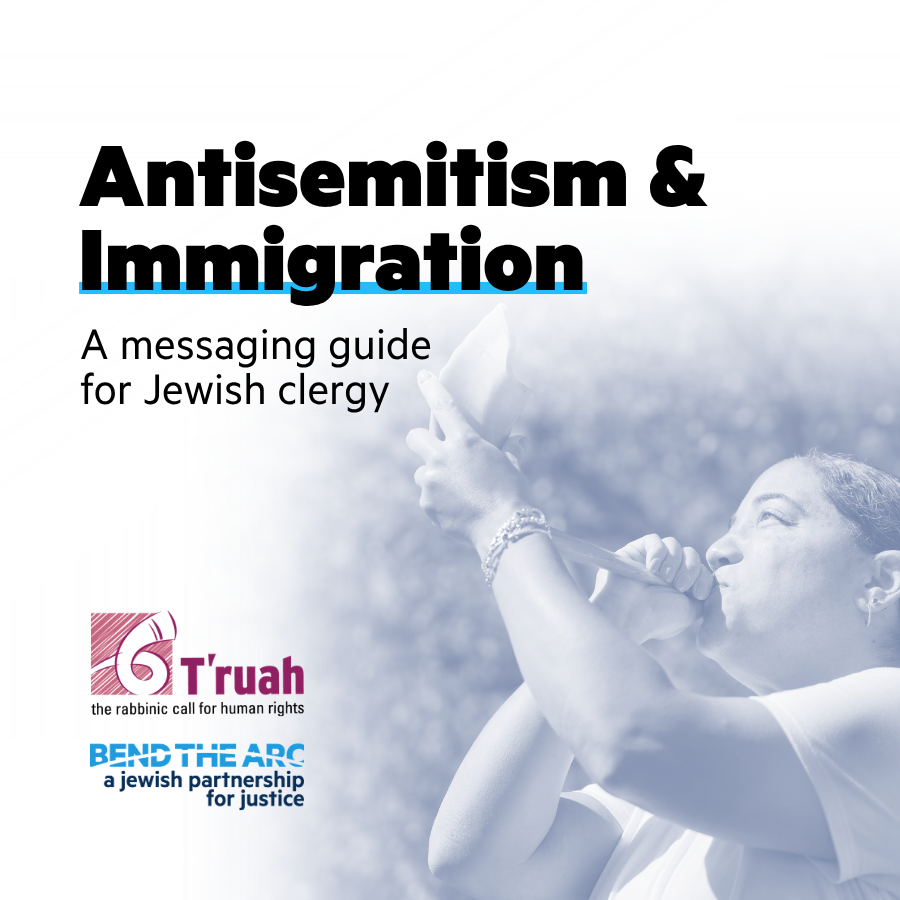
Antisemitism & Immigration: A Messaging Guide for Jewish Clergy
When the fight against antisemitism is used to harm immigrants, rabbis and cantors can be powerful voices to describe what’s at play and advocate for and inspire action towards our shared safety.

T’ruah: 2026 Poll Worker Recruitment Toolkit
Our toolkit enables you to recruit people in your community to sign up to become a poll worker.
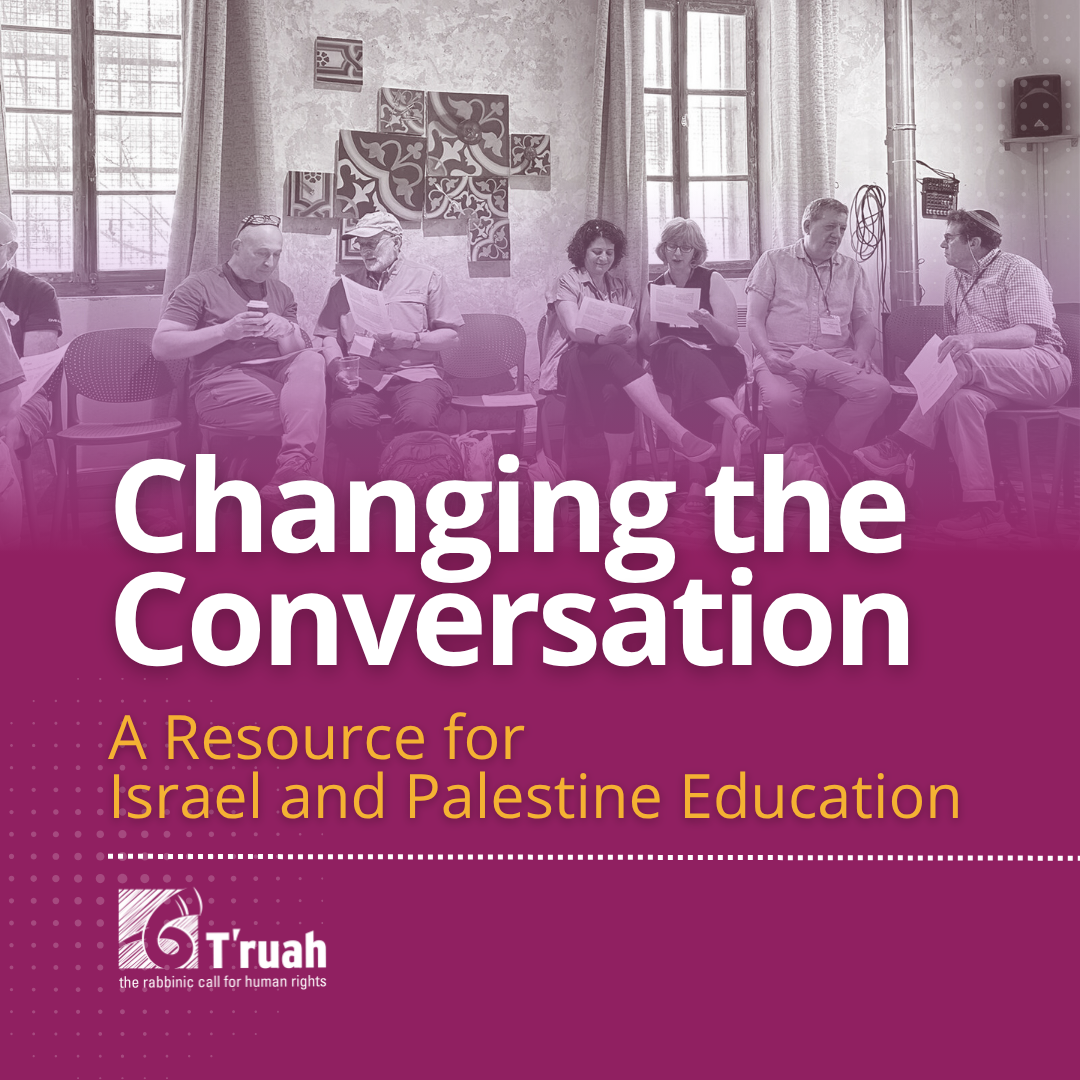
Download Changing the Conversation: A Resource for Israel and Palestine Education
An entry point for Jewish communities to engage with Israel and Palestine with depth, nuance, and care.




Lech Lecha: The Courage to Leave What We Know
Go forth …toward the stranger, the migrant, the worker, the prisoner, the person whose voice is routinely dismissed. And go forth knowing that we may not have the whole map. Abraham didn't. But he went anyway.
more

Noach: Faith Also Means Caring About Workers
When we open our hand to assist others, God also opens God’s hand. God’s nature is not independent of our actions towards each other, but reflects our way of being.
more

Bereshit: We Are Not Made for Cynicism
This divine capacity for imagination allows us to see beyond ourselves… understanding the grandeur of Hashem's world. To focus only on our own pain and suffering or to refuse to imagine the other worlds that are possible… misses the basic nature that Hashem made us to possess.
more

Simchat Torah: Nothing Great Is Ever Finished
The unfinished story at the end of the Torah is a continual reminder that even our greatest leader couldn’t complete the work, and neither can we.
more
Sukkot and the Shadow of October 7: Uninviting the Angel of Death in Israel
The death penalty ultimately becomes a lethal political tool, particularly for election campaigns. “Deterrence,” “retributive justice,” and “proportional justice” can become veils for vengeance; revenge does not bring closure to victims’ loved ones.
more

T’ruah: 2026 Poll Worker Recruitment Toolkit
Our toolkit enables you to recruit people in your community to sign up to become a poll worker.
more

Yom Kippur: The Courage to Let Go
Akiva had to do the terrifying work of giving up the narrative … that we are always just, and we are always right, for a newer, truer one: We are sometimes unjust, and we are sometimes wrong.
more

Rosh Hashanah: The Sacred Cornet, My Super Fandom for Emma Lazarus, and America at Its 250th Anniversary
What America means for [Emma Lazarus] in [“The New Colossus"] … is an utter repudiation of the scapegoating and demonizing of immigrants that America has seen so much of recently.
more

Nitzavim-Vayeilech: Writing Torah Together
Moses could have handed the Torah to Joshua and called his work done. Instead, he makes sure it belongs to everyone who will need it, including those whose voices are too often left out of the room.
more

Ki Tavo: Who Is Not in the Room?
It is not enough to say “treat marginalized people fairly;” the simple absence of unfairness doesn’t make us welcoming. Instead, we must examine the roots of injustice and take active steps to create change.
more