In Parshat Vayikra, we step into the world of sacrificial offerings in immense detail. With simultaneous relevance and irrelevance, I think about how important it is to bring these practices back to life in some way, shape, or form in our contemporary Jewish lives. Attending a shechita (the ritual slaughter of animals according to the laws of kashrut) and witnessing the death of animals is a practice that reminds us of the sentience of the creatures we choose to consume. It allows us to more fully consider how these offerings of death bring us life and sustenance. This awareness helps us to better value life, even of animals who have been taken to the slaughter. In the words of Rabbi Yitz Greenberg shlit”a (may he live for good and long days), “In every food preparation, in every meal… the kosher practitioner proclaims commitment to the supremacy of life.”
Bearing witness to, and taking part in such practices allows us to more fully embody the ethics of Jewish life, and in a way, returns us to an era where the killing of animals more regularly created the space to uphold their kavod (dignity).
Read more divrei Torah about Vayikra.
Cultivating an emphasis on embodied Jewish practice, for me, has been a building block not only for developing a more sensitive kashrut ethic, but also a deeper spiritual experience, and a more maximalist approach to Jewish life. Allowing Judaism to seep into my embodied practices, through play, creativity, and general kinetic activity, has functioned for me as the essence of what it means to live Jewishly.
Importantly, when Judaism is an embodied practice, both a halacha (law) and a halicha (way of walking), it leaves less room for holding the cognitive dissonance that separates one’s system of ethics from their Judaism. While embodied practices allow for Judaism to inform our ethics, it also requires the reverse to be the case. Our ethics must inform our practice of Judaism. If the two are not integrated but are instead felt as separate worlds, Judaism becomes a stifled archaicism, and no longer sits in the body. It becomes steadily held in the mind, and prevents us from letting our sacred teachings be felt.
The korbanot (ritual offerings or sacrifices) offer us a lens into a totally embodied Jewish practice. There were sights, smells, sounds, and tactile experiences built into this practice. A few modes for contemporarily cultivating an embodied Jewish practice are: spending time in nature to hike and encounter Divine creation with all our senses, the practice of havdalah each week – which incorporates taste, sight, and smell, developing more intentional practices around food, taking a long walk on Shabbat, napping on Shabbat, and developing any rituals that mark Jewishness in other parts of our lives. This final example includes both restful and active activities, and anything that helps us feel enlivened through multisensory experience.
Finally, embodied practice can also be a pathway for disability justice in Jewish spaces. Emphasizing multi-sensory rituals can be incredibly meaningful for kinetic learners and neurodivergent Jews. The choice to emphasize embodiment also offers a holistic approach that appreciates the whole body, including the mind, since utilizing the mind is, in itself, a sensory experience as well.
As we move through this week’s parshah, let’s let it move through our whole body. And as we begin to meet the full body’s needs, we may continue in the direction of tikkun (repair) for ourselves and the world.
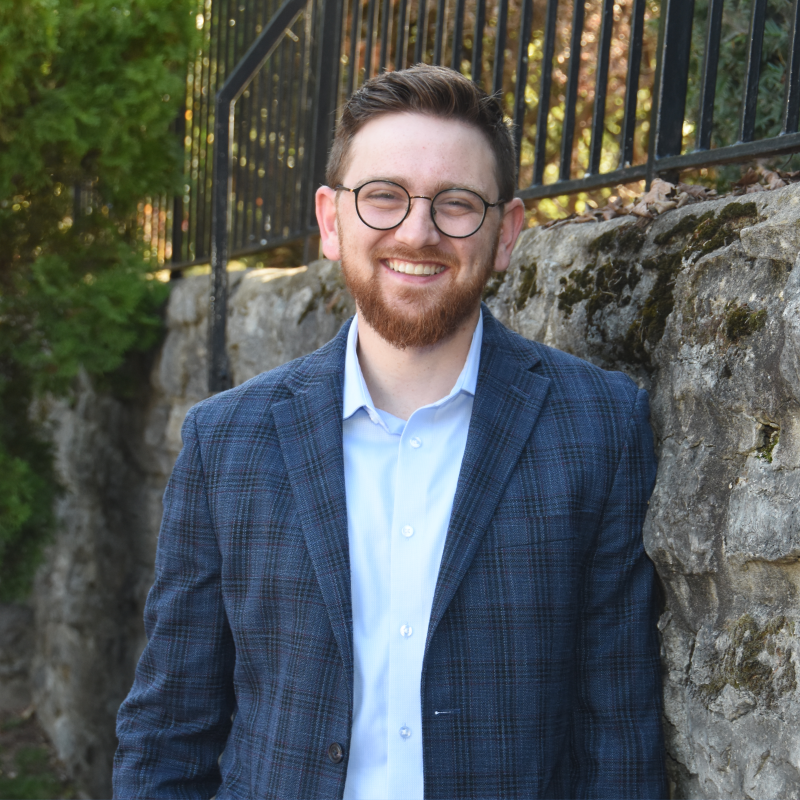
Rabbi Raffi Levi (he/him) is a chazzan, day school rebbe, disability activist, creative, and avid hiker based in Nashville, Tennessee. Beyond synagogue and school, Raffi has worked in a wide variety of Jewish communal settings, including college Hillels, summer camps, and retreat programs. Raffi is a recent musmach of Yeshivat Chovevei Torah, class of ‘25.