I’ve been thinking lately about the meaning of health care. Do we have a right to have our basic health needs cared for? Is health care a commodity to be determined by the market? Is it something we “owe” each other? This week’s Torah portion has something to teach us about this debate.
Of course, Judaism doesn’t tell us how to vote or recommend particular policies. What it does is offer a framework of values and obligations that can help shape how we think. And when we approach the question of health care through that framework, Judaism suggests a striking conclusion: A society is judged by whether its people are able to live healthy and dignified lives.
But before we get there, we have an issue of terminology — specifically, the language of “rights.” Judaism doesn’t exactly think in terms of rights. In Torah and Rabbinic writings, there is no such thing as, for example, a “right to free speech” or a “right to bear arms.” It is a Western philosophical idea that, as individuals, we have a claim to certain actions or possessions. Judaism, instead, thinks in terms of responsibilities — the mitzvot, which are our sacred obligations to one another and to the Divine. And if we reframe the question of health care this way, it allows us to ask a different religious question: not, “What am I entitled to?” but rather, “What responsibilities do we have to one another?”
Find more resources on Sh’lach-Lecha.
In this week’s parshah, Sh’lach-Lecha, Moses sends a team of spies to scout out the land of Israel. He tells them, “Go up into the Negev, ascend hill country, and see what kind of country it is. As for the people there, are they strong or are they weak?” (Numbers 13:17-18)
At first glance, this seems like an inquiry into military strength. After all, the Israelites are about to mount a campaign for the land. But some of the commentators read it differently. Rabbi Ovadia Sforno, the 16th-century Italian commentator, who was also a physician, suggests that Moses is asking the scouts to check on the physical strength or weakness of the individuals who live in the land, in order to assess the goodness of the country itself. Sforno writes: “In order to know whether a land is good to live in, one should look at its inhabitants and see whether they are strong and healthy.”
Sforno’s interpretation carries a profound message: The quality of a society can be measured by the health of its citizens. An eretz tovah — a good land — is not simply one with fertile soil, military strength, or economic prosperity. It is a place where people have access to the resources they need to be healthy: food, water, and medical care.
This idea has always been important in Jewish self-conception. The Talmud teaches that a city should not exist without a doctor. Many of the most important medieval sages — including Sforno, Ibn Ezra, and Maimonides — were physicians in addition to being commentators or philosophers. Jewish law prizes safeguarding human life — pikuach nefesh — above almost every other religious obligation. And indeed, many medieval Jewish communities existed as self-contained units that cared for the financial, medical, and spiritual needs of their members — the poor were fed, the sick were cared for, all in the context of the kehillah, the community.
Find more resources on health care.
In other words, Judaism treats health care not as a luxury but as a communal concern.
Of course, Jewish sources do not provide a blueprint for a modern healthcare system. The Torah does not tell us how insurance should work, how governments should allocate resources, or what specific policies a nation should adopt.
But the tradition does insist on something more fundamental: We are responsible for one another. A society cannot call itself just while the sick are impoverished. It cannot call itself prosperous while the vulnerable are denied basic health care. If the measure of a land is in the health of its people, then it is all our responsibility to care for one another, to ensure that our fellow human beings are treated like expressions of the Divine Image. As it says in the Talmud, “If you save a single life, you have saved an entire world.” (Mishnah Sanhedrin 4:5)
In the end, Judaism teaches us that we are not isolated individuals but members of a covenantal community. The health and dignity of our neighbors are never only their concern; they are ours as well.
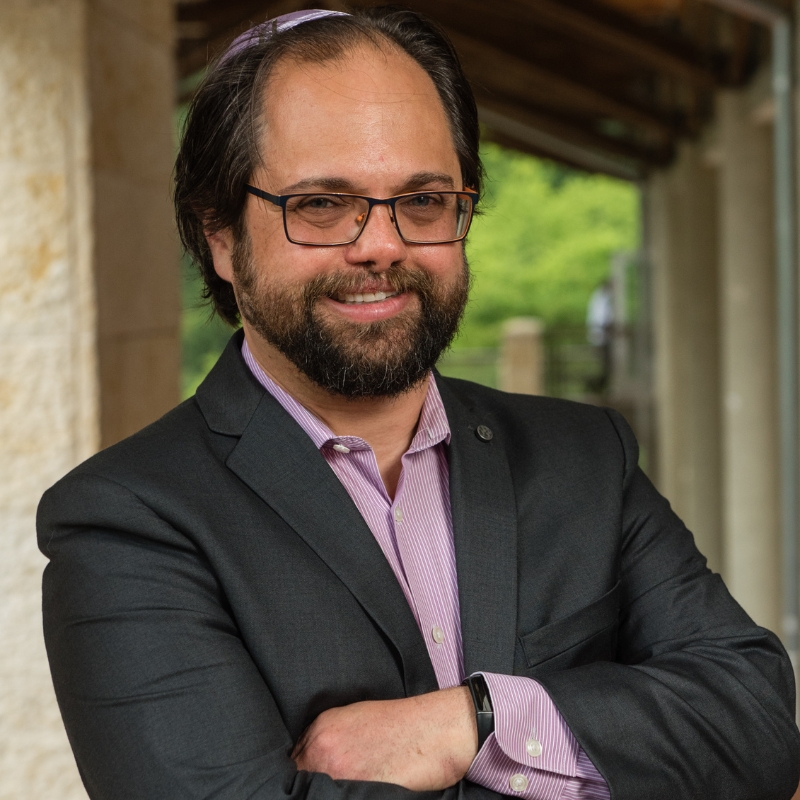
Rabbi Micah Streiffer is the founder and director of Laasok, a dynamic, progressive beit midrash (“house of study”) where Jewish texts spark meaningful conversation, spiritual growth, and real-world action. He also teaches in synagogues and communities across North America and hosts the popular “Seven Minute Torah” podcast. Ordained in 2007 at Hebrew Union College-Jewish Institute of Religion, Micah serves on the Responsa Committee of the Central Conference of American Rabbis and is currently pursuing a Ph.D. in Jewish Thought at McMaster University.