
The following is an excerpt from “Fragments III: Democracy, “ a journal from T’ruah.
Today, as educators across the U.S. go about their daily work, many wonder if they will lose their jobs over claims that the mere mention of race in their classrooms makes them anti-white racists. Will a child in their class feel uncomfortable? Will parents and organized conservative groups rise up in arms, calling lessons that mention race “woke indoctrination”? Will a library book brought home by a child lead to the library’s funding being threatened?
An organized political campaign has created these fears. Its adherents have the goal of stamping out what they label “critical race theory (CRT).” Yet opponents of CRT aren’t actually focused on this very specific area of academic legal studies. Rather, the anti-CRT campaign, led by Trump allies, seeks to create outrage over public education about U.S. racism, past and present. The goal is to silence discourse about the history of American racism, including discussions of slavery. Anti-CRT efforts threaten the livelihoods of those who speak to the persistent injustices of United States history. They seek to enshrine a story of American innocence.
What would it look like to fight for a democratic vision of history: one that invites multiple perspectives on history rather than seeking to deny or repress certain narratives? How is the fight for democratic history connected to the struggle for a multiracial democracy that is dreamed of and fought for by so many?
In 1951, a group of multiracial members of the Civil Rights Congress (CRC) set an example of how everyday people can advance democracy through engagement with history. With the Holocaust fresh in their memory, this organization of mostly Black and Jewish communists gave voice to the commonality of their peoples’ experiences in a petition to the United Nations charging the U.S. with genocide. “We Charge Genocide!” deftly compared Black and Jewish experiences of violence to increase international pressure on the U.S. government to protect Black people within its borders. Those who wrote and signed the petition were lifelong activists and organizers working on behalf of anti-racist and pro labor causes. In their efforts to charge the United States with genocide before the United Nations, CRC members fought McCarthyist state repression1 and helped to prepare the ground for subsequent civil rights actions and legislative victories. Their work shows us how we can narrate histories in solidarity to fight for democracy.
The text of “We Charge Genocide!” envisions a political system dedicated to creating the conditions for the full political participation of all people, with an emphasis on those who have been persistently excluded from political participation by racist violence, denial of adequate healthcare and education, unsafe housing, disenfranchisement, and economic exploitation. The petition’s authors viewed these basic necessities as inherently tied to free political participation.
So long as people live without material safety, coercion by the powerful can easily distort their democratic will. In situations of desperation, employers can threaten employees without fear of backlash. Obstacles in the way of voting become more difficult to overcome. For instance, plantation owners in the Jim Crow South would evict sharecroppers who registered to vote, leaving them homeless and jobless — as happened to civil rights leader Fannie Lou Hamer and others.2 Resources needed for political engagement were sapped when Black community members found themselves without housing, adequate healthcare, or other daily needs and had to pull together to mobilize resources for basic survival. Under these circumstances, it becomes difficult to advocate for changes that one wishes to see in the world. The CRC, like others in the civil rights movement, knew that full democratic participation would only be possible when people could freely develop and contribute their gifts and perspectives to the benefit of all.
To create a global pressure campaign against Jim Crow, Jews and non Jews stood together, pushing the U.S. to take important steps toward multiracial democracy. Throughout “We Charge Genocide!,” the petition’s authors pointed out the many similarities of racist violence in the U.S. to Nazism, connecting the master-race ideology behind Nazism to continuing Jim Crow-era white supremacy. In both cases, they identified how segregation supported genocide: “The whole institution of segregation, which is training for killing, education for genocide, is based on the Hitler-like theory of the ‘inherent inferiority of the Negro.’” The authors noted that Jewish victims of Nazism were ruthlessly separated in social, political, and economic realms from their supposed Aryan superiors. They then argued that segregation in the U.S. served as education to see Black people as inherently threatening and fundamentally parasitic. White Southerners’ communal acceptance of lynchings was bolstered by teachings that the murder of Black people protected white women and the white race. The authors drew readers’ attention to anti-miscegenation laws in effect under Nazism and across many U.S. states. To outlaw intimacy among people, they wrote, was to deny fundamental equality and create the conditions of ignorance and dehumanization that fuel genocide.
The CRC’s campaign was formed in response to the recently-created Genocide Convention of 1948, which outlawed acting with the intent to destroy in whole or in part a national, racial, ethnic, or religious group. The prohibition further applies to conspiracy to commit genocide, public incitement to genocide, and attempted genocide. They argued that the U.S. was guilty of many forms of destruction of Black Americans as a people: guilty of murder — judicial and extrajudicial — through indifference and through explicit sanction; guilty of mental harm from unchecked threat and coercion by police, the Ku Klux Klan, and Klan like groups; guilty of conditions calculated to bring about genocide by depriving Black communities of the economic basis of survival and democratic representation; guilty of incitement to genocide through the inflammatory statements of white supremacist Dixiecrats; guilty of conspiracy to destroy the group by officially sanctioning segregation, disenfranchisement, and profiteering through unequal pay for Black workers and gouging Black families for housing costs.
The CRC charged the U.S. with genocide as a part of a successful campaign to create international pressure in support of civil rights legislation. Adopted only three years earlier, the UN’s Genocide Convention brought popular attention to the concept of “genocide,” a term coined in 1944 by Raphael Lemkin, a Polish-Jewish refugee and jurist. Although the term “genocide” was used in the Nuremberg trials (1945-6) to describe Nazi crimes, it was not yet an agreed-upon crime under international law. As the UN deliberated on making genocide a crime under international law, the language of the convention drew contestation. The Soviet Union sought to remove the language that specified forced labor and property transfers. Latin American member states sought to remove language that specified cultural genocide, given their treatment of Indigenous peoples. U.S. senators worried aloud about being charged with genocide over America’s treatment of Black and Indigenous people. Despite these concerns, the UN Convention on Genocide passed with overwhelming international support.
The Civil Rights Congress sought to leverage this support to increase international advocacy for the struggle against racism in the U.S. In the absence of U.S. politicians and judges willing to take courageous stands against lynching and segregation, civil rights advocates looked elsewhere for support for a meaningful democracy that would protect Black people. They saw parallels between Reconstruction-era amendments to the U.S. Constitution and the UN Universal Declaration of Human Rights. They appealed to the United Nations to enforce human rights provisions that the U.S. government was unwilling to enforce. They appealed to people around the world to call the U.S. to account for failing to live up to its self-proclaimed status as a beacon of freedom in contrast to the Soviet Union.
The authors saw the struggle against genocide in the U.S. as inherently global. Chief Prosecutor in the Nuremberg trials and Supreme Court Justice Robert H. Jackson had argued that genocide was a crime unlike others, insofar as its existence inherently threatens world peace. The petition’s authors repeatedly emphasized this point. They described Nazi genocide as a precursor to offensive war, with Hitler expanding domestic genocide into war against Eastern Europe, and expanding genocide in turn. When a nation is allowed to carry out its master-race ideology against supposed domestic “inferiors,” they argued, it will only be a matter of time until that nation sets its sights on “inferiors” beyond its borders. The petition’s authors drew on this history to show how the racism that sanctioned murder of Black people across the country could be felt, too, in the anti-Asian racism that allowed U.S. violence during the Korean War, which was ongoing as “We Charge Genocide!” was presented to the United Nations.
The CRC’s framing of genocide as the violence of master-race ideology in action linked the experiences of Black people in the U.S., Jewish people and other victims of Nazism across fascist Europe, and Korean civilians during the Korean War. They saw multiracial democracy as a prerequisite for peace, believing that a democracy where Black, working class, and poor people could vote and meaningfully participate in their government would make U.S. imperial war impossible.
As a Jewish descendant of survivors and victims of Nazism, I see extraordinary power in connecting the struggles of Black people in Mississippi and Chicago to the struggles of Jews in Auschwitz and Warsaw. I am honored when the struggles of my ancestors connect to present struggles and are used to understand racist violence, prevent harm, and support the realization of multiracial democracy.
Yet there are some today who are having the opposite reaction, who see solidarity between any groups as inherently threatening. The movement against “Critical Race Theory” is a potent example. Why is this backlash happening now? The architect of the movement, Christopher Rufo, was motivated to act against the multiracial solidarity he saw coalescing in the uprisings in the wake of George Floyd’s murder by police. Rufo got his start by arguing to Fox News viewers that the 2020 mass protests were not a response to police murder, but the result of a liberal conspiracy of classroom indoctrination. He claimed that teachers and educational institutions manipulated students to see the U.S. as imperfect and conspired to create a multiracial solidarity movement by fabricating an American history of oppression.
Many demands of the 2020 uprising against police violence held the seeds of multiracial democracy:3 The police came under unprecedented scrutiny for their role as pillars of a racist plutocracy that violates, imprisons, stigmatizes, and denies livelihood to poor and working-class Black people. Reparations were and are being seriously considered, and enacted in some municipal governments, as a means of providing self-determination to those who have been persistently locked out of intergenerational economic stability.4 The demands of these protests spoke to the conditions of full political participation, including access to quality and affordable housing, clean water, safe jobs with living wages, debt jubilee, bodily autonomy (including free, universal healthcare, freedom from police repression, and reproductive autonomy), free access to quality education, and the memorialization of historical injustice.
As in 1951, these contemporary movements for multiracial democracy attracted backlash from those who envisioned a U.S. government accountable to a limited set of white voters. Members of the backlash movement, funded by far-right donors and directed by Christian nationalist former Trump administration appointees, hope that by punishing educators whose teaching brings about “discomfort” for white students, they will silence histories of white supremacy and break the multiracial solidarity that holds the promise of multiracial democracy. For Rufo, creating a debate over critical race theory is a political maneuver to “take some of these essentially corrupted state agencies and…contest them, and then create rival power centers within them.”5
Well-funded backlash movements seek to confuse (“Can I trust the people entrusted with my children’s education?”), threaten (“Will I lose my job if I teach history as I have before?”), and fragment connections to one another (“Is my sympathy for this cause a result of manipulation?”). Solidarity is an antidote to backlash because it creates safety and deepens trust amid shared struggles.
In December of 1951, the CRC’s leader, William L. Patterson, presented the “We Charge Genocide!” petition to the United Nations General Assembly in Paris. Paul Robeson presented the petition at UN headquarters in New York. It was signed by civil rights luminaries W.E.B. Du Bois and Claudia Jones, lifelong activists like Mary Church Terrell, Ida Rubenstein, and Maude White Katz, and ordinary people like Mary Kalb, a Jewish homemaker from Virginia. It was co-written and signed by movement journalists and lawyers like Elizabeth Lawson, Maurice Braverman, and Yvonne Gregory, as well as Howard Fast, a soon-to-be famous Jewish writer. In the late ‘40s and early ‘50s, these individuals were on the frontlines of the fight to desegregate, organize labor, defend free speech, and oppose racism and lynching. Their solidarity was foundational for the modern civil rights movement.
When he arrived in Paris, Patterson was warned to expect backlash from the U.S. government. His supporters were ready. They had secured a visa that would allow him safe passage out of France. When Patterson’s passport was indeed revoked, he knew how to avoid arrest. As he traveled throughout Europe, his supporters set up interviews and events where he could share the petition’s message. When he sought to return to the U.S., his supporters used organized protest and legal intervention to get him released after 17 hours of detention in a London airport. He made it through customs in New York with only a strip search, thanks to a mixture of media spotlight, protest, and threats of legal action. Each attempt to humiliate, intimidate, and repress Patterson and the petition’s message was met with the resilience that solidarity can offer us.
The CRC’s Black-Jewish solidarity went beyond words. CRC members organized alongside local citizens and union members to provide security when Nazi sympathizers (with the support of the police) attacked a 1949 CRC concert fundraiser in Peekskill, NY. When NAACP leaders Harry and Harriette Moore were murdered in a Ku Klux Klan bombing in Mims, Florida, the CRC organized protests and issued press releases condemning the Moores’ murder, and drawing connections of solidarity to other recent bombings of Jewish synagogues and Catholic churches. The authors of “We Charge Genocide!” knew that the white supremacist ideology enacted by the Klan and their ilk were also threats to Jewish livelihood.
The CRC offers a model of how to memorialize collective loss to build multiracial democracy. As opposed to the right-wing anti-CRT movement today, which gathers followers to silence histories, the CRC shows us the power in connecting our histories of struggle to the present moment and creating pressure and solidarity across borders.
It is disconcertingly easy to find parallels today between Nazism, Jim Crow, and the growing efforts across the U.S. to suppress honest examinations of U.S. history. Across the country, and especially in Texas and Florida, where state governments are passing laws in accord with the anti-CRT campaign, we are seeing an extraordinary number of books being banned. The white Christian nationalist flavor of this censorship means that books that speak to themes of social justice, as well as to Black, Jewish, and LGBTQ+ experience, are being removed from libraries and classrooms. This censorship undermines students’ avenues to self-esteem and self-understanding. It blocks students’ connections to movements for multiracial democracy. Censorship seeks to corrode multiracial sympathy and understanding in favor of anti-democratic, divide-and-conquer techniques that allow U.S. racist plutocracy to continue unabated.
The CRC’s example of making connections between past and present struggles for democracy shows us how attacks on education, and on books in particular, are warning signs. The 1933 Nazi book burnings — part of a program to purify German culture of what the Nazis labeled foreign influence — presaged the Final Solution six years later. Historical book bans in the U.S., too, sought to whitewash U.S. Anglo-Saxon history and enabled anti-Black violence. At the turn of the 20th century, as a part of an effort to instill “Gone With the Wind”-style nostalgia for the institution of slavery, the United Daughters of the Confederacy (UDC) implemented a wide variety of book bans. This effort reached its apogee with the 1915 Klan-recruitment blockbuster film, “Birth of a Nation.” The UDC’s campaign of censorship and propaganda created conditions where the Klan enjoyed popular support for racist terrorism. Black WWI veterans, for instance, faced unchecked racist riots, beatings, and lynchings upon their return home. The early 20th century Klan had significant membership across the North and South and a widespread presence on college and university campuses.
If present-day book bans are a warning sign of genocide, the CRC offers us a model of how to resist it. It shows that people can work to build international solidarity, simultaneously preventing violence and fighting for multiracial democracy. We can be allies to those worldwide who are fighting against the neo-fascist attempts to purify their culture, be it in Hungary under Victor Orbán, in Argentina under Javier Milei, or in Israel/Palestine under Benjamin Netanyahu. We can build solidarity in defense of targeted authors, artists, audiences, and students. In this vision of multiracial democracy, we build the capacity to support one another, while fighting relentlessly to create the conditions for full political participation. The CRC and “We Charge Genocide!” show us the power of memorializing collective loss side-by-side. By connecting the victims and survivors of Nazism and Jim Crow, they reveal how shared understanding, solidarity, and political creativity can be born from collective grief.
NOTES
1 Many of the petitioners who signed the document were brought before the House Un-American Activities Committee in the years that followed. The most immediate effects were felt by William Patterson and Paul Robeson, both of whom had their passports confiscated. CRC activities were routinely surveilled and threatened by a mixture of vigilantes, local police, and the FBI. The Miami CRC chapter, which was a particularly powerful force on behalf of labor and against Jim Crow and the KKK, was subject to a campaign of prolonged harassment by the media, police, and FBI, which significantly undermined their efforts. See “South of the South?: Jewish Activists and the Civil Rights Movement in Miami, 1945-1960,” Raymond A. Mohl, (Gainesville: University Press of Florida, 2004).
2 See for instance, the Student Nonviolent Coordinating Committee’s 1964 pamphlet, “Mississippi: Subversion of the Right to Vote” https://www.crmvet.org/ docs/msrv64.pdf.
3 The legacy of the CRC’s work can be seen in these 21st century movements. In 2014, a delegation of activists revived the 1951 petition based on the experiences of police violence among Black youth in Chicago and submitted it to the UN Committee Against Torture. See http://wechargegenocide.org.
4 In the aftermath of protests, municipal reparations have been enacted in Evanston, IL and approved in Providence, RI and Amherst, MA. In California, reparations have been pledged to survivors of the state’s forced sterilization program. As of May 2024, proposals for state-level reparations have passed State Senate hurdles and are currently under consideration by the State Assembly.
5 See Benjamin Wallace-Wells’ interview with Christopher Rufo, “How a Conservative Activist Invented the Conflict Over Critical Race Theory,” https://www.newyorker.com/news/annals-of-inquiry/how-a-conservative-activist invented-the-conflict-over-critical-race-theory.
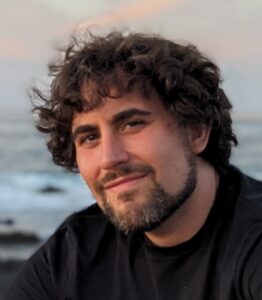
GEOFFREY ADELSBERG, PHD (they/he) is a professor and organizer. Their in-progress book project, “Between the Saved and the Damned: Intergenerational Responsibility for Colonial Complicities,” argues for the intergenerational collective responsibility of groups that are driven to participate in colonial harms in the aftermath of their own experiences of duress and displacement. Their academic articles have addressed collective apologies in the context of Indigenous resistance at Standing Rock, and racism and the death penalty.