Most people remember Vayera for its heart-pounding conclusion: An angel stops Abraham’s hand as he is about to sacrifice his beloved son, Isaac. In the face of this violent and unsettling story, it’s easy to forget how the parshah begins: with simple hospitality. Abraham, sitting at the entrance of his tent at the hottest moment of the day, sees three strangers and runs to greet them. With his wife’s help, he provides these visitors with food, water, and a comfortable place to relax, and it turns out the men bear the good news of Sarah’s forthcoming pregnancy. Good thing Abraham and Sarah were so kind to them!
I have written for (M)oral Torah before about my visit one year ago to the West Bank. Alongside other T’ruah rabbis and human rights supporters, I accompanied Palestinian olive farmers and shepherds as they attempted their day-to-day activities against the backdrop of intimidation and violence from extremist Jewish settlers. This fall, again, Jewish activists will join Palestinian farmers for the annual olive harvest. Harassment from settlers has become so severe that it has made international news on the regular, and even U.S. Ambassador Mike Huckabee has referred to Jewish extremism as a “horrific act of terror.”
In the face of such violence, it is easy to forget the other moments of my trip, moments that won’t make any headlines. And so, one year later, I’d like to return to that visit and the remarkable hospitality that, until its climactic end, defined my stay.
Find more resources on Vayera.
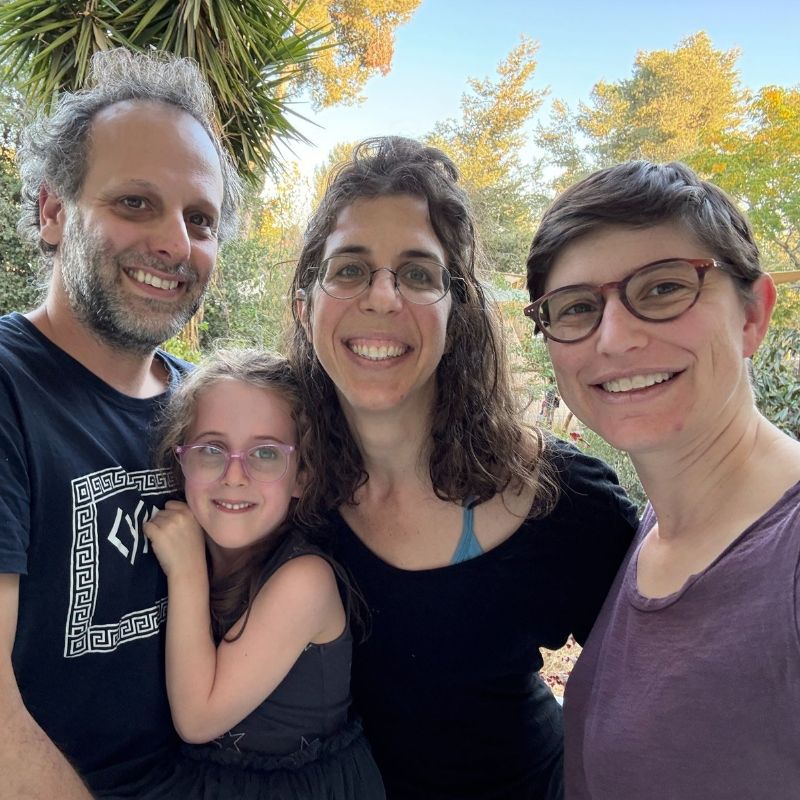
I landed at Ben Gurion Airport in late October 2025 and was delighted to take the train directly to Jerusalem, a train that had not existed during my last stay in the Holy Land. My friend, a Jewish Israeli whom I had met during her postdoc in Philadelphia, met me at the Central Bus Station and guided me onto the light rail to her home in Beit Hakerem.
What followed was an idyllic Shabbat: eating delicious Shabbat meals full of fresh homemade hummus and roasted eggplant; walking around the leafy neighborhood; sitting on the balcony drinking tea from verbena leaves; and playing board games with my hosts and their two young children, who had gone to preschool with my own children in Philly. My hosts were endlessly gracious, providing me with all that I needed and never asking anything in return.
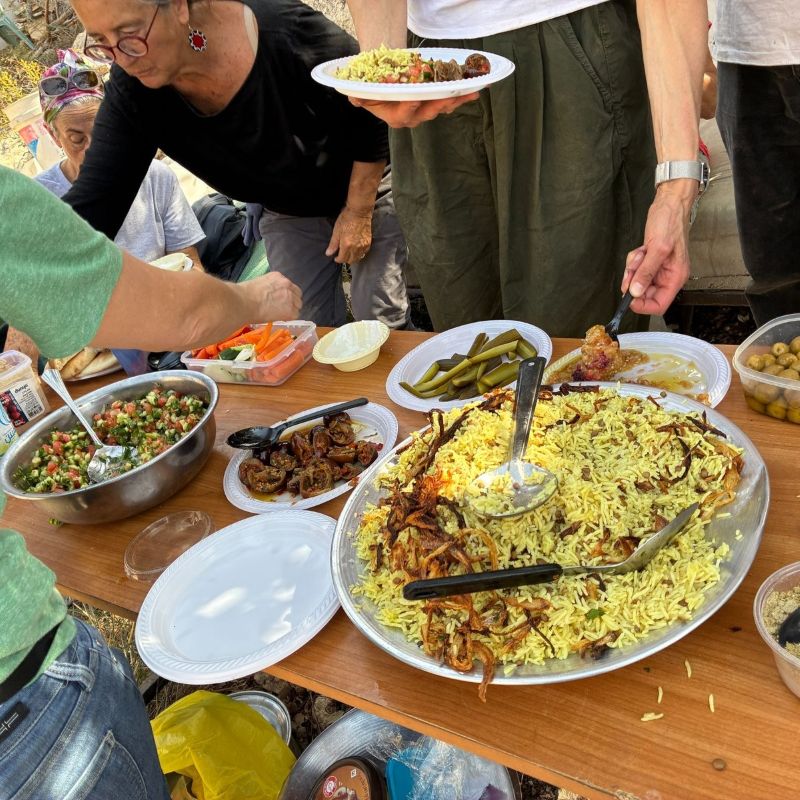
As Shabbat came to a close, I said goodbye to my generous hosts and headed into Merkaz Ha’Ir (Center City Jerusalem) to meet up with the other T’ruah rabbis. Early the next morning, we took a bus to Battir, a small Palestinian village near Bethlehem. We hiked into a wadi (dry valley) and met up with a family that owned an olive grove along the terraced hillside. All day long, we harvested olives, keeping an eye out at the Jewish settlement at the top of the hill. And all day long, our host — the woman who owned the grove — cooked. With portable stoves and bags of rice pulled out of a small storage shed, she mixed a little bit of this and a little bit of that to put together a feast. As we reached noon, that hottest moment of the day, our host insisted that we sit down together around the table (which she had pulled out from nowhere and set up on the hillside) and enjoy the delicious meal she’d cooked.
We sat together — rabbis, international activists, Palestinian farmers — and ate rice, cucumber and tomato salad, olives, and all manner of fresh foods. Our Palestinian host spoke no English but still managed to harangue us into eating more and more, gesturing at how skinny we all looked! We laughed together and told stories, even as we knew that violence could arrive at any moment.
As we headed to a Palestinian shepherding community in the Jordan Valley, where a smaller group of us would stay overnight, I thought about the story that I would tell when I returned: about the remarkable hospitality of the Middle East. About the ways in which the peoples of the Holy Land are far more alike than they are different. About how close peace felt while sitting in the shade of an olive tree, eating rice with Jews and Palestinians, Israelis and Americans.
Find more resources on Israel/Palestine.
As has been written elsewhere (and elsewhere), the story of my trip changed quite a bit on the last day. Jewish settlers attacked our group of olive harvesters, injuring a rabbi with a surveillance drone and shooting live ammo in our direction. What started as a beautiful story of hospitality and coexistence became yet another harrowing tale of settler violence and extremism.
I sometimes wish that Vayera ended after Abraham and Sarah’s visit with the three mysterious guests. I wish that the moral of the story was that one should always welcome guests with open arms. Instead, it is impossible to speak about Vayera without bringing up the destruction of Sodom and Gomorrah, the almost-sacrifice of Isaac. But these moments of violence and bloodshed need not define our parshah.
These moments of violence need not define our relationship with the Holy Land.
I yearn for a day when I can tell the story of Middle Eastern hospitality without reference to pain, struggle, occupation, and violence. When we can eat in one another’s homes, sharing hummus and rice and stories and friendship. When the angels come not to announce destruction but to stay our hands and give us only good news. Let that day come speedily, bimheira v’yameinu. Ken yehi ratzon, let this be God’s will.
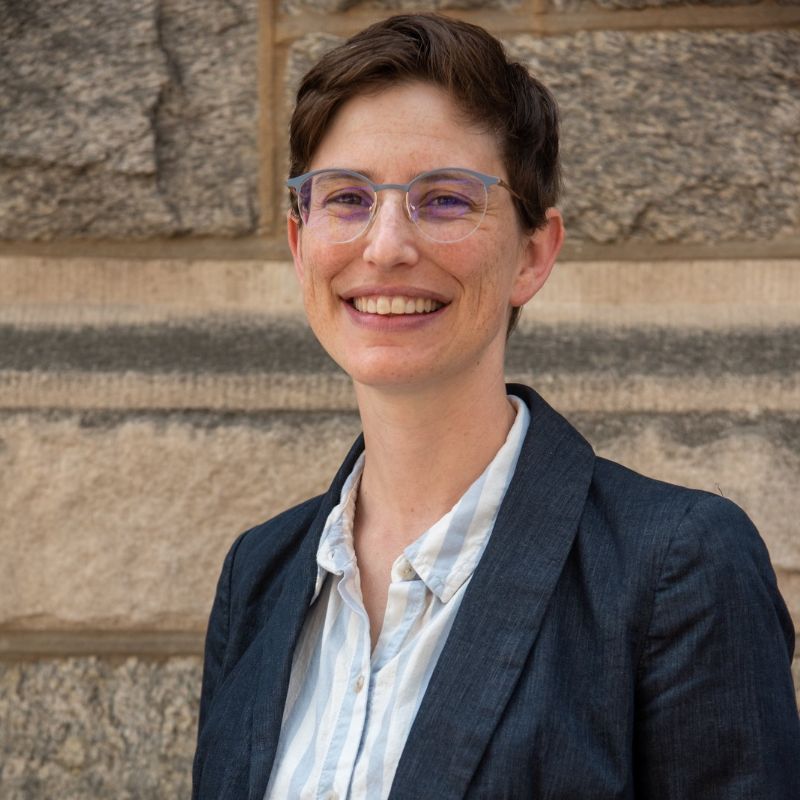
Rabbi Abi Weber is the special projects coordinator for Princeton University’s Project in Philosophy and Religion. Previously, she served as associate rabbi at Temple Beth Zion-Beth Israel (BZBI) in Philadelphia and was a rabbinic fellow at Congregation B’nai Jeshurun in New York City. She lives in Princeton, NJ, with her wife and two daughters.