Sukkot has not been the same for world Jewry since October 7, 2023. On that date, Hamas led a coordinated, multi-pronged assault from the Gaza Strip into Southern Israel, marking the deadliest single day in the country’s history and triggering the ongoing Gaza war. The massacre hit civilian communities, kibbutzim, military bases, and the outdoor Nova music festival. Roughly 1,200 people were killed — mostly civilians — and 251 hostages were abducted back to Gaza, of whom only 168 ultimately returned alive. It all transpired at the conclusion of Sukkot — the Jewish people’s ostensible z’man simchateinu, season of joy.
Like most Jews, I will never forget the Sukkot of 2023. We had recorded a song in our sukkah for an upcoming interview with famed death penalty abolitionist and “Dead Man Walking” author Sister Helen Prejean, part of the work of L’chaim! Jews Against the Death Penalty, a group I co-founded. Sukkot also fell just days before Texas was scheduled to put to death L’chaim’s Jewish pen pal, Jedidiah Murphy, on October 10, which is World Day Against the Death Penalty. When the news came out after the chag about the horrors unfolding in Israel on October 7, Jedidiah, who openly admitted to his crime and was profoundly repentant, poignantly shared with us his prayers for Israel in his final messages before his execution. It happened that an unseasonably strong windstorm had toppled our sukkah on that very same Shemini Atzeret/Simchat Torah holiday weekend. For the longest time afterward, I could not get myself to take down our family’s destroyed temporary dwelling, which had become a symbol for me of the apparent annihilation of any hope for a sukkat shalom for our extended mishpacha, family, in Israel.
Find more resources on Sukkot.
This year, like every year since, the impending collective yahrzeit for the victims of October 7 will cast a shadow in sukkahs across the globe, including my own. This year, however, that steadily encroaching shadow will extend well beyond those victims. It will expand, too, past the tens of thousands more innocent civilians in Gaza and elsewhere whose deaths resulted from an ongoing, vengeful cycle of violence. This year, it will also reach those convicted of carrying out the monstrous pogrom of October 7, 2023.
The reason for this burgeoning pall of death is the “Prosecution of Participants in the October 7 Massacre Events Law (5786–2026),” which the Israeli Knesset passed after a unanimous 93-0 vote this spring. (Of note, those members of the Knesset disgusted by the bill had left the chamber ahead of the vote.) The thousands of members of L’chaim! Jews Against the Death Penalty from across Israel and the world unequivocally oppose this law’s fixation on vengeful killing, which proponents justify as deterrence. Instead, L’chaim members, together with those of countless other Jewish and non-Jewish organizations, support the victims of the October 7 acts of terror through restorative justice — and life. L’chaim members equally rejected the first death penalty law that Knesset members passed earlier in the year. That first law, dubbed the “Death Penalty for Terrorists Law,” is blatantly racist, dangerous, vengeful, and unjust in its specific targeting of Palestinian terrorists. Just two hours before Yom Kippur, Israel’s Minister of National Security Itamar Ben Gvir proposed applying this heinous law to one such terrorist.
It is understandable that the second law, which condemns to death those accused of carrying out the unmitigated slaughter of October 7, garnered more support than the first piece of legislation. Vengeance, after all, is infectious. I understand this viscerally: Before becoming a Jewish prison chaplain, I used to support the death penalty myself, motivated by my feelings of anger against those who murdered my ancestors in the Shoah. So, too, can countless other L’chaim members who directly descend from Holocaust survivors. Few articulated this better than Nobel laureate and staunch death penalty abolitionist Elie Wiesel, who, in a 1989 interview with Amnesty International, famously equated the death penalty with the Angel of Death and stated: “With every cell of my being and with every fiber of my memory, I oppose the death penalty in all forms…”
Wiesel had earlier supported the execution of Nazi mass murderer Adolph Eichmann, but by the end of his life he had become an unequivocal abolitionist. As late as Oct. 27, 2010, Wiesel spoke out unequivocally against the death penalty during a lecture on capital punishment at Wesleyan University in Connecticut. When asked for his opinion on the death penalty for the perpetrators of a brutal triple murder in nearby Cheshire, CT, (one which I remember well as a Connecticut native) Wiesel stated: “I know the pain of those who survive. Believe me, I know… Your wound is open. It will remain. You are mourning, and how can I not feel the pain of your mourning? But death is not the answer.” He resolutely concluded with these now famous words: “Death should never be the answer in a civilized society.” Wiesel’s charge should serve as a clarion call for all the Jewish world as the shadow of October 7 once again approaches this Sukkot, now with this manmade Angel of Death vividly in tow across Israel.
Find more resources on the death penalty.
L’chaim members have spouted reasons ad nauseam detailing why twenty-first-century Judaism must continue to carry Wiesel’s abolitionist torch. Beyond the unimpeachable fact that capital punishment is a flagrant human rights transgression, it also risks executing the innocent. (This year, for example, Yom Kippur fell on September 21, a date which marks the execution of not one, but two innocent individuals by separate states in the last 15 years.) For this reason alone, Jewish tradition has made the death penalty virtually impossible to carry out. In Israel, the death penalty will increase — not decrease — terrorist attacks, creating more murders and martyrs (shahids) and endangering Jews worldwide. From Adolph Hitler to Donald Trump and now Itamar Ben Gvir with his public celebrations of state-sponsored murder, the death penalty ultimately becomes a lethal political tool, particularly for election campaigns. “Deterrence,” “retributive justice,” and “proportional justice” can become veils for vengeance; revenge does not bring closure to victims’ loved ones.
Many Jewish hearts and minds have realized these truths in recent months. During that time, L’chaim has seen a marked increase in its ranks, surging to well over 5,000 members. Many recognize that fighting the death penalty is now one of the most significant Jewish issues of our day, and that Israel’s new laws pose a very real and present danger to Jews in Israel and the Diaspora. L’chaim will continue working with partners in Israel and internationally to sound this alarm and to repeal these laws in the Israeli Supreme Court in the coming year. If readers support this mission, please do consider joining L’chaim (at no cost!) here. We are stronger together.
Repealing Israel’s death penalty laws will not remove the shadow of October 7 from any sukkah. It will, however, help free all of our sukkot from the grasp of Malakh HaMavet — the Angel of Death — who has become this year’s most recent addition to the holiday’s list of ushpizin. Only by permanently rescinding the invitation for this “guest” can we hope to return this season’s z’man simchateinu to its joyful essence, and reclaim the sukkah’s symbolism of peace, hope, and, ultimately, life.
May we never forget the victims, z’l, of October 7, 2023.
May their abiding neshamot (souls) be loving guides for us all this Sukkot and always.
May no more blood be spilled in their sacred names.
And may all the killings END.
Chag Sukkot sameach.
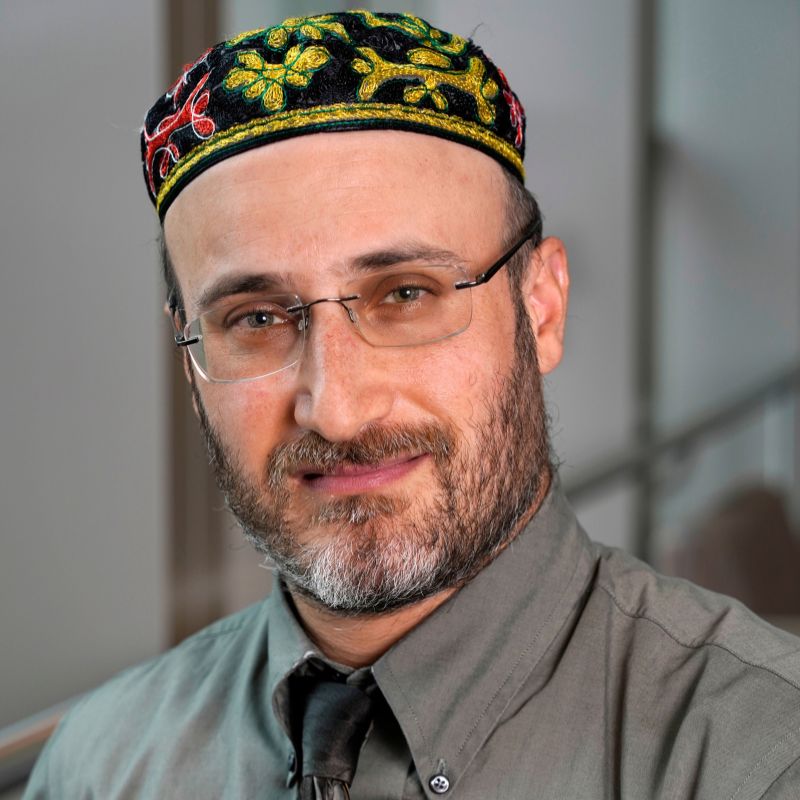
Cantor Michael Zoosman (he/him/his) is a certified spiritual care practitioner with the Canadian Association for Spiritual Care/Association canadienne de soins spirituels (CASC/ACSS) and received his cantorial ordination from the Jewish Theological Seminary of America in 2008. He sits as an advisory committee member at Death Penalty Action and is the co-founder of L’chaim! Jews Against the Death Penalty. A Jewish prison chaplain and psychiatric hospital chaplain, Cantor Zoosman currently serves as a spiritual health practitioner (chaplain) for various mental health outreach teams, working with individuals in the community living with severe mental health disorders and addiction. He lives with his family in Vancouver, British Columbia, Canada.