“Lech lecha.” Go forth. Go yourself. Go for yourself. Go from yourself.
We still grapple, searching for the meaning of these famous words in Torah, but I have always been struck by how little God tells Abraham. God does not give him any detailed itinerary. There is no Google Maps pin. No five-year strategic plan. No guarantee that the journey will be easy.
Just: “Go forth from your land, your birthplace, and your father’s house to the land that I will show you.” (Bereshit 12:1) Abraham is asked to leave the familiar before he knows where he is going.
Applying this concept to the work of civil justice, we can consider the lesson embedded in God’s message to Abraham. We can consider that justice may involve the willingness to leave what is familiar territory.
We know how powerful familiarity can be. We inherit assumptions about who belongs, who has power, whose suffering matters, whose voice is credible. We inherit national stories, communal stories, family stories. Some of these stories sustain us. Others quietly teach us whom we can overlook. Lech Lecha asks us to examine those stories.
Abraham leaves one world and enters another. But notice what happens almost immediately. His journey is not simply about personal spiritual fulfillment. God says: “I will bless you… and you shall be a blessing.” (Bereshit 12:2) The blessing is never intended to stop with Abraham. That is a distinction that says so much.
Find more resources on Lech Lecha.
For some, Jewish spirituality can become a private enterprise: my relationship with God, my spiritual growth, my prayer, my healing, my journey. But Lech Lecha refuses to leave us there. If we are blessed, we are meant to become a blessing. If Torah transforms us, that transformation must eventually touch the world around us. This is where our attention to social justice begins.
There are some very uncomfortable moments in this narrative.
Abraham enters Egypt because of famine. Fearing for his life, he presents Sarah as his sister rather than his wife. Sarah is taken into Pharaoh’s household. Abraham protects himself, while Sarah bears the danger. It is a disturbing story, particularly because it is Abraham who is the one through whom the covenant is supposed to emerge. We expect him to be worthy of blessing, and the Torah does not give Abraham a free pass simply because he is Abraham. Rabbinic discourse has the full spectrum of interpretations and conclusions, including Ramban, who states that Abraham committed a grave sin in this ruse.
Our tradition does not require us to turn our ancestors into saints. We can love Abraham and still critique Abraham. We can inherit a sacred tradition and still name the places where that tradition’s protagonists fail to live up to its moral demands. Indeed, perhaps that is one of Judaism’s greatest gifts…the fact that our ancestors are not presented as morally perfect people.
Abraham argues with God later in Genesis. Moses challenges God. The prophets challenge kings. The rabbis challenge one another. The Talmud preserves minority opinions even when the law follows another view. Torah is not a book that teaches us to obey blindly. It teaches us to wrestle. And sometimes wrestling means asking whether the world we have inherited is worthy of the world we hope to create.
I love that T’ruah’s name for this series of drashot is (M)oral Torah because it reminds us that morality is not an optional supplement to Judaism. It is woven into the fabric of Jewish life. Human dignity is not a distraction from Torah. It is one of the ways Torah becomes real. When God says, “Go forth,” to Abraham, we can consider the ways in which the command is addressed to us as well in our day.
Find more resources on social justice, leadership, and philosophy.
Go forth… from the assumptions that keep us comfortable.
Go forth… from the temptation to confuse tradition with inevitability.
Go forth… from the places where someone else’s suffering has become background noise.
Go forth …toward the stranger, the migrant, the worker, the prisoner, the person whose voice is routinely dismissed. And go forth knowing that we may not have the whole map. Abraham didn’t. But he went anyway.
The Jewish journey has never been simply about arriving somewhere. It is about becoming someone and, ultimately, becoming a blessing to someone else.
Lech lecha.
Go forth.
Not because you know exactly where the road will lead.
Go because staying where you are is no longer morally sufficient. We need more, and the world needs more. The Torah asks us to become the kind of people through whom blessing can enter the world.
So… let’s go on that journey.
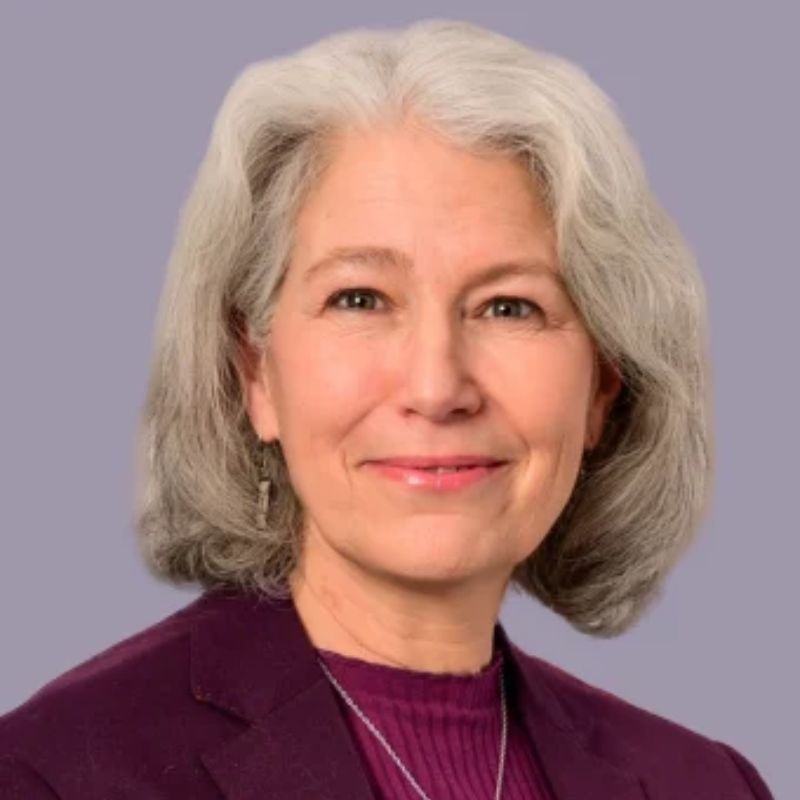
Paula Baruch Houpt is a reform Jewish cantor, spiritual director, educator, and rabbinical student based in Hamilton, Ontario. Ordained as a cantor in 2018 and a Jewish spiritual director in 2005, she has devoted her career to creating communities rooted in prayer, learning, compassion, and justice. She is currently completing her rabbinic studies at the Pluralistic Rabbinic Seminary and will be ordained in December 2026. Paula brings to her teaching and preaching a deep commitment to Jewish values of human dignity, courageous questioning, and the pursuit of justice. She is especially interested in the ways Torah can call us to move from spiritual reflection to meaningful action in the world.