This week, we finish reading the Torah, and the conclusion may feel less than satisfying. After we have spent four books following the career of Moses as the leader of our people, God tells Moses to ascend Mt. Nevo in the Jordan Valley, and from there God shows him the whole panorama of the land of Israel. But then, the kicker: “I have let you see it with your own eyes, but you shall not cross there.”
Moses dies with a kiss from God and is buried in an unmarked grave. The story of our people will continue without him, yet always with him. Some people say that the book of Joshua, of entering and conquering the land, should be the sixth book of the Torah. But tellingly, we don’t read it in full in the synagogue. We are much more riveted by the unfinished business of Moses than the glorious continuation. The unfinished story at the end of the Torah is a continual reminder that even our greatest leader couldn’t complete the work, and neither can we.
Find more resources on Simchat Torah.
Moses represents the idealist in each of us. He wants to be in the promised land, with an exemplary society, a holy nation following the Torah. With pain and protest, he learns to be satisfied with just a vision of his dream and with knowing that he has nurtured a successor and generation(s) to come. Many of us are also idealists, and we want to see our hopes for society come to fruition, whether it’s true equality for women, healing the environment, or a fully just society. We want to see it all in our lifetimes, but like Moses, we eventually realize that the journey to our ideals may be the destination.
Moses eventually focused on building up his successor and preparing a new generation to go on without him. Because he let go, he lives on. Some 3,400 years later, we still call him, “Moses our teacher.”
Our tradition of unfinished business doesn’t stop with Moses. Fast forward a few centuries, and we have the indelible story of King David, who also had a great project he never got to fulfill. King David ascended to the throne, vanquished Israel’s enemies, and made Jerusalem his capital. But his greatest dream was left to the next generation. He didn’t get to build the Holy Temple because he had been warlike and shed innocent blood. (Chronicles 1 22:7-10) His son, Solomon, whose name means peace, can build the Temple, a place of peace. King David wanted to build a “house” for God, but he learned, somewhat ironically, that God would be the one to build the “house” for him, meaning, not a fancy building, but people — his family and dynasty. (Samuel II 7:11) And some 3,000 years later, we still sing, “David Melech Yisrael, chai ve-kayam,” “David, King of Israel lives on.”
Find more resources on social justice, leadership, and philosophy.
When I meditate, I’m told to “be here now.” But being happy in the here and now actually depends on knowing that there is something bigger than us that outlasts us. According to philosophy Professor Samuel Scheffler, author of “Why Worry About Future Generations?,” knowing that we aren’t the completion, that life continues after us, is critical to our happiness and feelings of value and meaning in the present. He suggests various scenarios, including: If we knew that we would live a great life, but the human race wouldn’t last much longer, we would become depressed and lose much of our meaning in life.
According to Professor Scheffler, because we take this belief in the future for granted,
We don’t think much about its significance. Yet …this belief plays an extremely important role in our lives, quietly but critically shaping our values, commitments, and sense of what is worth doing. Astonishing though it may seem, there are ways in which the continuing existence of other people after our deaths — even that of complete strangers — matters more to us than does our own survival and that of our loved ones.
And that’s why knowing that we are part of efforts that may take generations, from scientific discovery to social justice, gives life greater meaning, not less.
This is something secular society seems to be discovering as our future is threatened by climate change. But as Jews, we have always been blessed with a consciousness of the links between generations, what we owe the past and what we want to convey to the future: the chain of tradition, the legacy of values and ideas, the Masoret, literally that which is passed on from one generation to the next.
We aren’t Moses or King David. But like Moses, we can devote our whole lives to our ideals, while knowing that we will end up passing the work of a better society to the next generation. Reflecting on King David, we can realize that no matter how impressive our career achievements are, our greatest satisfaction may be the relationships that will live on after us. Knowing that we are doing the best we can to provide a peaceful and just future for generations to come can allow us to truly enjoy the blessings of life, right in the here and now.
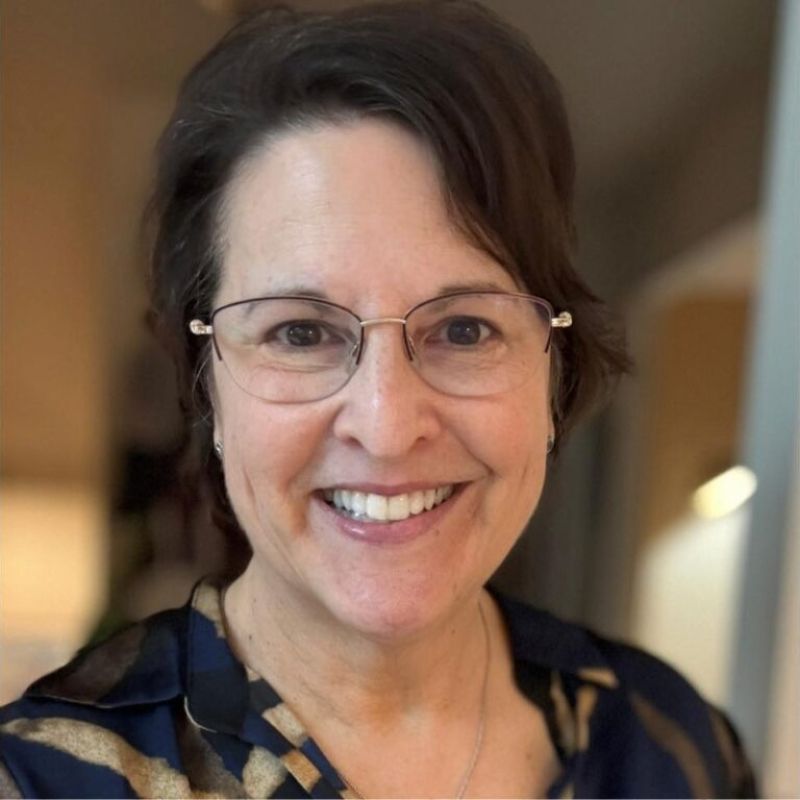
Rabbi Julie Hilton Danan is the religious leader of Seaside Jewish Community in Rehoboth Beach, DE. She is a graduate of the ALEPH Rabbinic program and holds a Ph.D. in Hebrew Studies from the University of Texas at Austin. She is a nature photographer and enjoys teaching about Judaism and nature. You can learn more on her website, wellspringsofwisdom.com, or follow her on Instagram (@wellsprings) or Facebook (@juliehiltondanan).