Summer after summer, the veranda of our 140-year-old Victorian home serves as an open invitation to our neighborhood. Our front porch has become a unique cultural stage. Every evening, we invite friends and passers-by for a cool drink, a little nosh, and spirited conversation. On one side of the porch, I rotate several flags — Pride, Coexist, and Black Lives Matter — or my favorite: a rainbow flag sporting the symbol of Otpor, the nonviolent student movement that helped topple the Milošević regime. Because our house sits on the way to the local ice cream parlor, dozens of people walk by daily. “Thank you!” I’ll hear from the sidewalk, or, “Appreciate your flag!”
For me, these moments are expressions of re’eh anochi — the opening words of Parshat Re’eh. I read this phrase as a mantra: “Look, I [am here].” It reminds me that everywhere is the G*dfield, and I try to live with that awareness of ultimate oneness.
Then, one sunny day, the oneness momentarily shattered.
A family with littles was walking by when a man in the group began screaming vitriol at our porch. When his family realized a person was sitting there, they urged him to move along. He did, reluctantly, only to return twenty minutes later with the exact same rage.
Find more resources on Re’eh.
I carry tremendous regret about that interaction. My brain was so triggered that I froze, speechless. Fifty milliseconds — that is how quickly the amygdala can activate when we encounter an unknown or hostile situation. This rapid assessment helps detect threats and trigger the fight-or-flight response necessary for survival. But unless the amygdala is tempered by our higher brain functions, what protects us can also trap us. My amygdala ran the show that day.
After much reflection, I made a commitment: The next time someone directs such remarks toward our flags (hasn’t happened again to date), I won’t retreat into silence. I’ll step down to the sidewalk and ask them to help me understand where they are coming from. I have no illusions of becoming besties, and there are risks. But for me, the greater risk that day was the lost opportunity for dialogue — regardless of outcome. My executive function is ready if it happens again.
This tension mirrors a struggle within Parshat Re’eh itself.
Though the portion opens with the expansive vision of re’eh anochi, it soon presents rigid binaries that contradict that oneness. We’re told the land we are entering is ours — not theirs. We are counseled to destroy the inhabitants’ sacred spaces to make way for our own, and the text soon extends this boundary-making even further. To me, parts of Parshat Re’eh read as if they were authored by a triggered, binary-driven amygdala — the master of duality.
Sign up to receive (M)oral Torah in your inbox each week.
Ultimately, Re’eh reveals itself to be a complex, “both/and” text. It stretches from the Chasidic maxim alts is Got (all is G*d) to binaries that hurt my heart. But as that very first line reminds us, we have a profound choice about how we move through the world: “See, I am setting before you today [the formula of] the blessing and curse.” (Deuteronomy 11:26) Read more closely, we might read, “Open your eyes: I am [always — present tense] giving you choices, especially when we’re punim to punim — face to face. And when are we not?”
The poet Gertrude Hildreth Houseman wrote,
Between the boundaries of birth and death lies the dominion of choice: to be a doer or a dreamer, to be a lifter or a leaner, to speak out or remain silent, to extend a hand in friendship or to look the other way; to feel the sufferings of others or to be callous and insensitive. These are the choices; it is in the choosing that my measure as a person is determined.
This, then, is the work of Re’eh: to see clearly — not only the person before us, but also the fear that rises within us; not only the boundaries that protect life, but also the binaries that diminish it. To live re’eh anochi is not to pretend that danger, hatred, or difference do not exist. It is to refuse to let fear have the final word. It is to keep choosing the open porch: presence over retreat, curiosity over certainty, and the holy possibility of seeing the image of G*d across the lines that divide us.
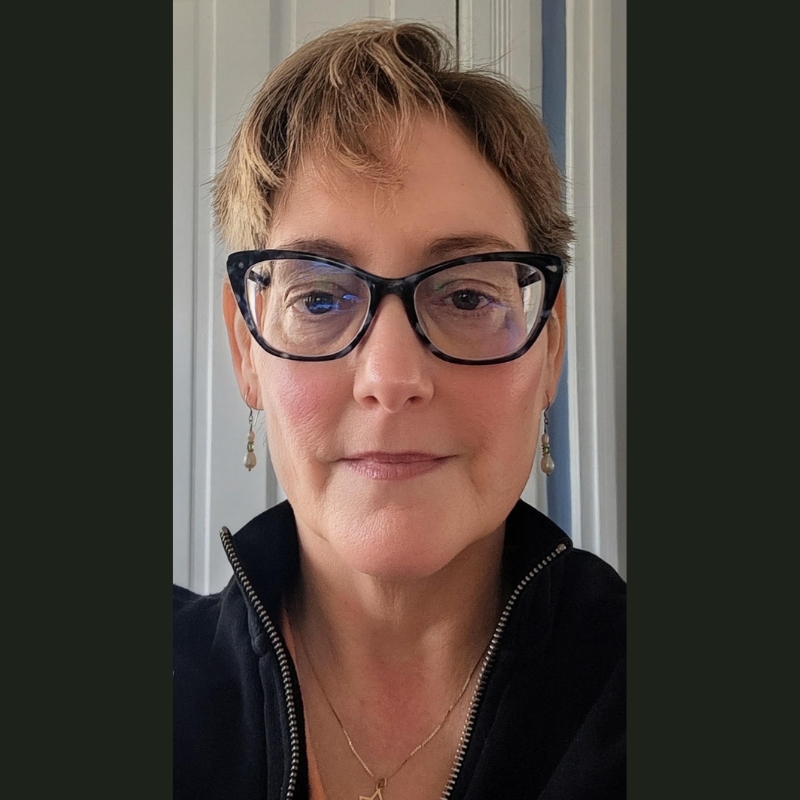
Rabbi Dr. Chava Bahle is a Renewal rabbi and the first Jew to earn a Doctor of Ministry from Catholic Theological Union at Chicago. Her forthcoming book with Vincent Brook, “Moral Courage in Dangerous Times: Conrad Veidt, an Ethical Biography,” will be followed by a study of Jewish clergy who were abused by Jewish organizations.