Resources
Featured
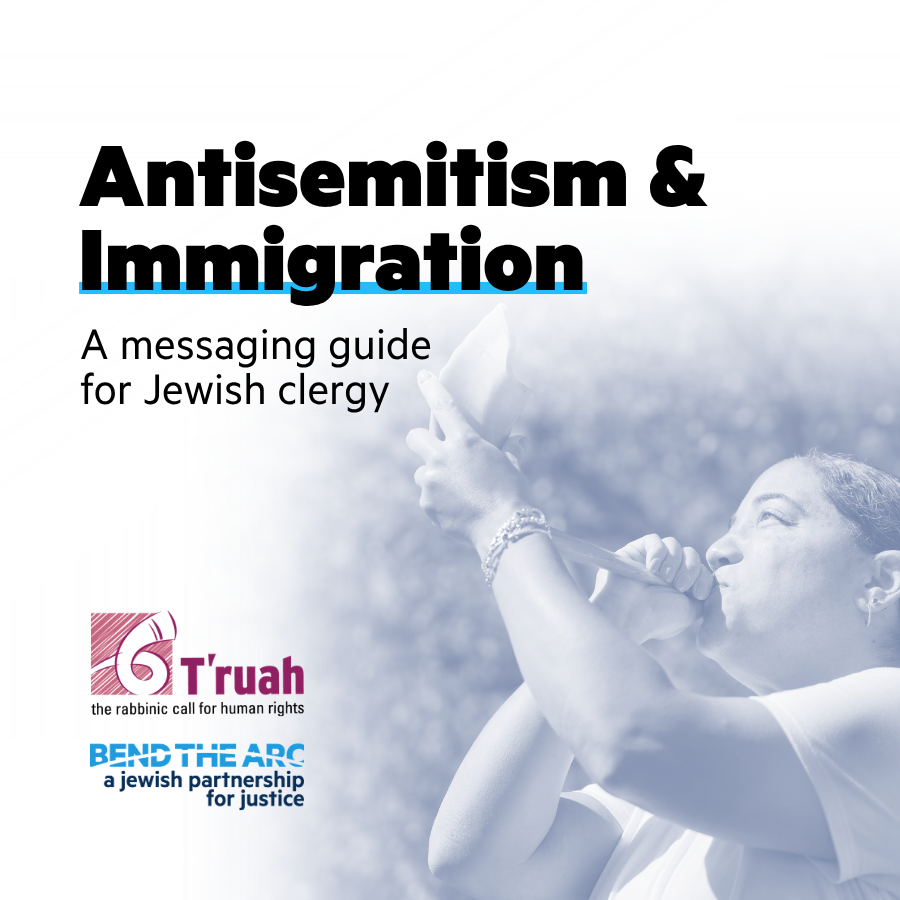
Antisemitism & Immigration: A Messaging Guide for Jewish Clergy
When the fight against antisemitism is used to harm immigrants, rabbis and cantors can be powerful voices to describe what’s at play and advocate for and inspire action towards our shared safety.
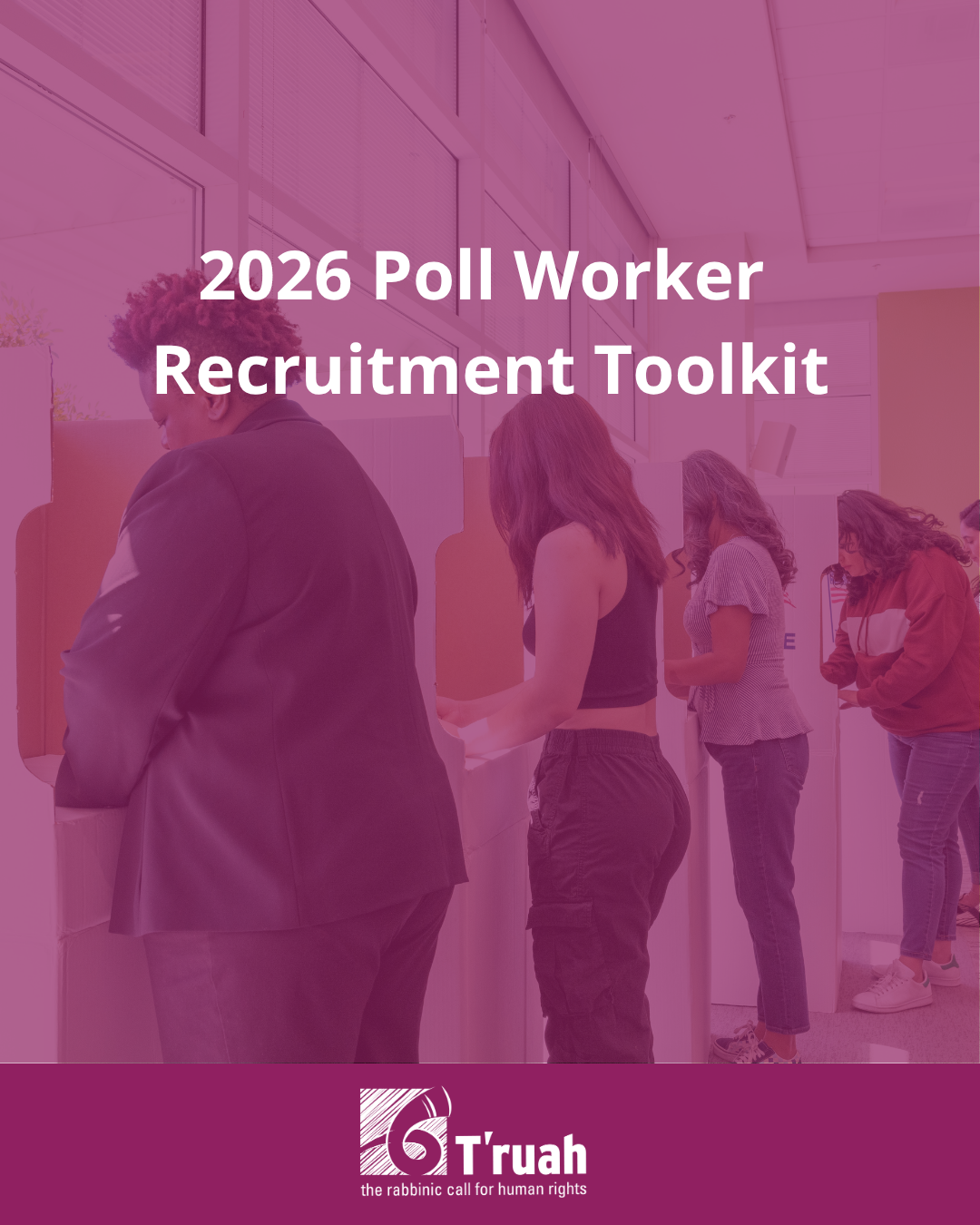
T’ruah: 2026 Poll Worker Recruitment Toolkit
Our toolkit enables you to recruit people in your community to sign up to become a poll worker.
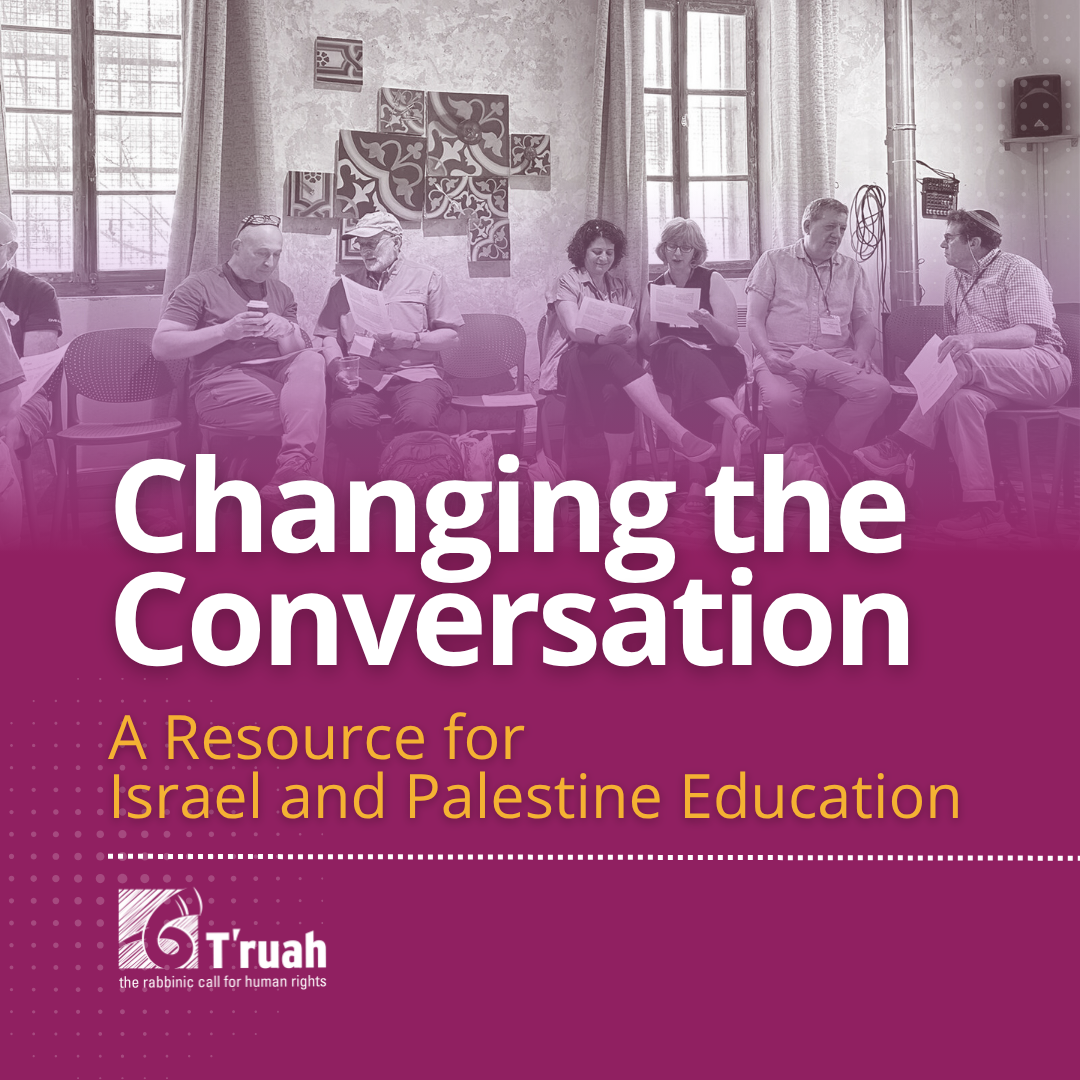
Download Changing the Conversation: A Resource for Israel and Palestine Education
An entry point for Jewish communities to engage with Israel and Palestine with depth, nuance, and care.


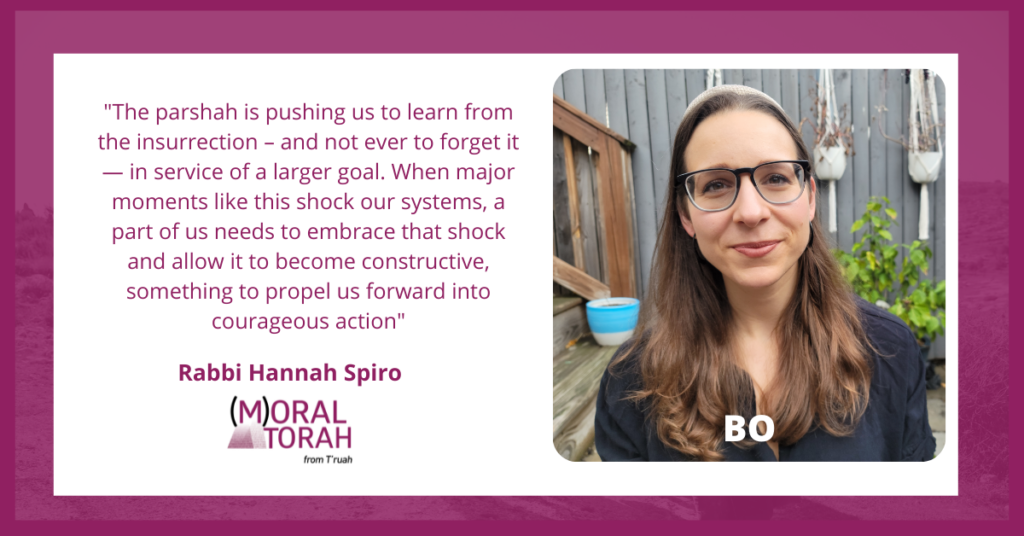
One Year After the Hard-Hearted Insurrection of January 6, 2021
The parshah is pushing us to learn from the insurrection – and not ever to forget it — in service of a larger goal. When major moments like this shock our systems, a part of us needs to embrace that shock and allow it to become constructive, something to propel us forward into courageous action.
more
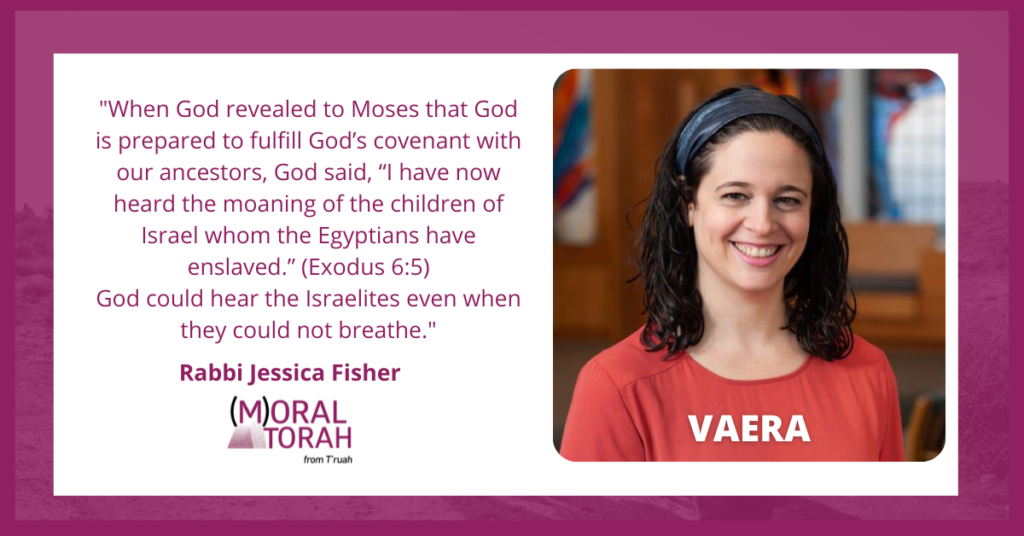
Taking Time to Catch Our Breath
When God revealed to Moses that God is prepared to fulfill God’s covenant with our ancestors, God said, “I have now heard the moaning of the children of Israel whom the Egyptians have enslaved.” (Exodus 6:5) God could hear the Israelites even when they could not breathe.
more
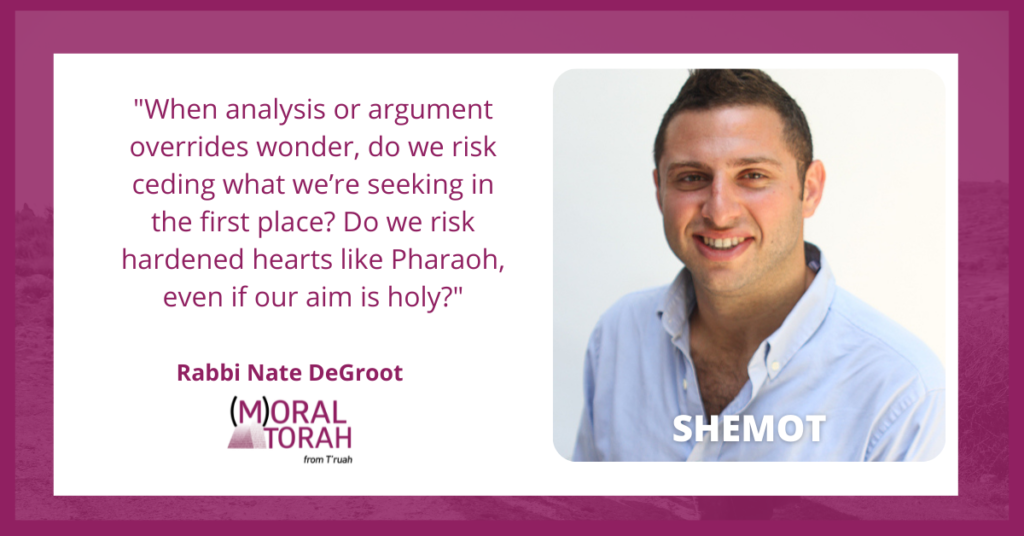
Finding God with Open Hearts
When analysis or argument overrides wonder, do we risk ceding what we’re seeking in the first place? Do we risk hardened hearts like Pharaoh, even if our aim is holy?
more
The Blessings that Motivate Change
Jacob’s blessing becomes a charge, to his guardian angels and to all of us, that our blessings can motivate us to become agents of change, especially when inequity prohibits others from readily accessing these resources.
more
How Drawing Near Leads to Speaking Out
This drawing-near is ultimately what leads to Joseph’s emotions overwhelming him; breaking from silence into sobbing, he orders the room cleared and then reveals himself to his brothers. Our drawing-near is also what engaged our emotions and drew us from silence into speech.
more
Joseph and His Amazing Technocratic Dream Coat: The Descent to Tyranny
I am puzzled by the ways in which a country that readily replaces phones and computers as soon as we experience even the slightest decrease in performance can insist that our inherited system for organizing our economy and government works just fine.
more
The Symbolism of Planting During a Shmita Year
While we are deeply connected to the land of Israel, with spiritual roots that seek to implant themselves in its rich soil, connection is not predetermination.
What we build on top of the land, as a civilization with our own agency, matters just as much. Whom we build it with matters.
more
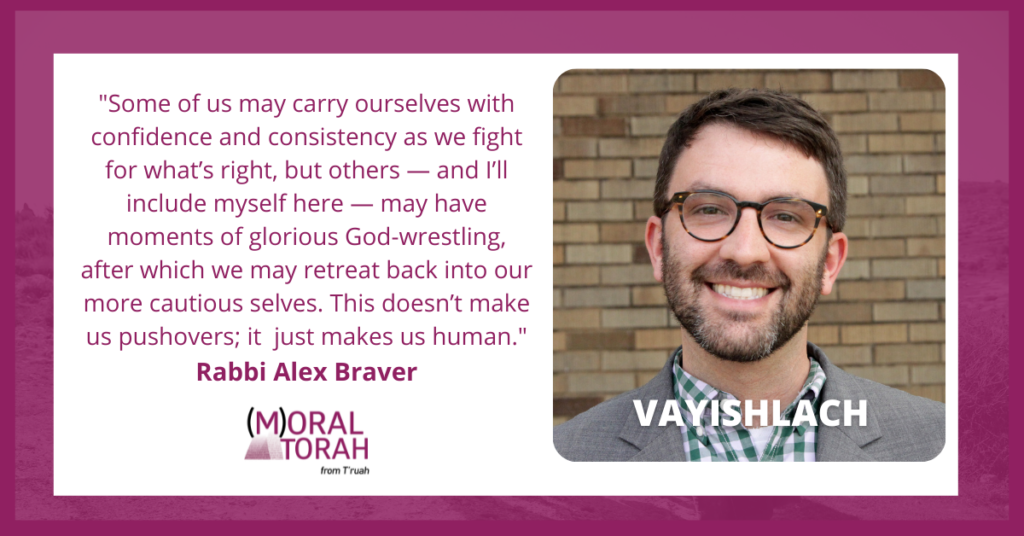
Wrestling With Our Inner Jacob and Israel
To me, Jacob feels human for his fearfulness — and even more human for his backsliding. Some of us may carry ourselves with confidence and consistency as we fight for what’s right, but others — and I’ll include myself here — may have moments of glorious God-wrestling, after which we may retreat back into our more cautious selves. This doesn’t make us pushovers; it just makes us human.
more
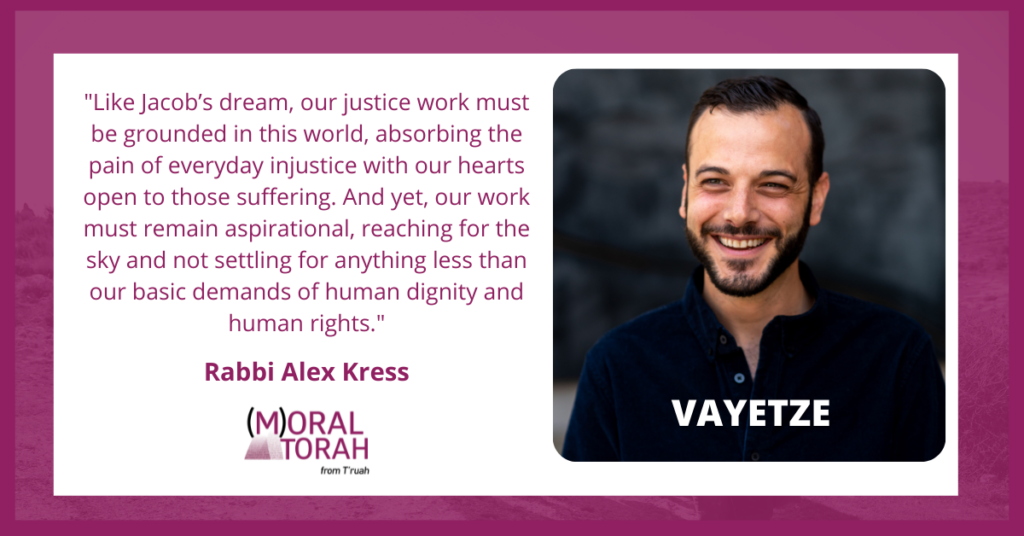
Dream Until It’s Your Reality
Like Jacob’s dream, our justice work must be grounded in this world, absorbing the pain of everyday injustice with our hearts open to those suffering. And yet, our work must remain aspirational, reaching for the sky and not settling for anything less than our basic demands of human dignity and human rights.
more