Resources
Featured
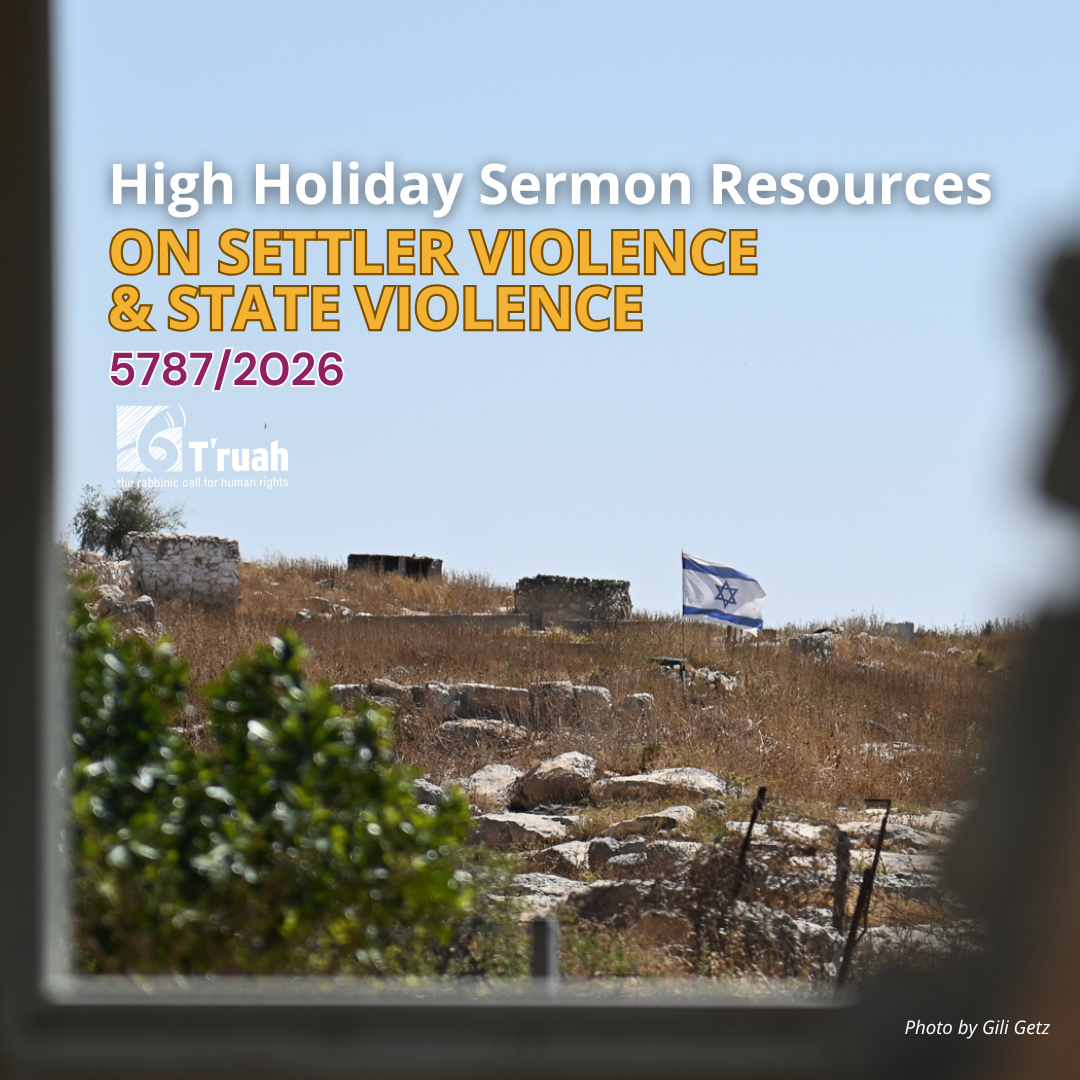
High Holiday Sermon Resource: On Settler Violence & State Violence
Use these clergy resources to help your community make a narrative shift: expanding beyond rightful condemnation of settler violence to seeing and working against the violence of the occupation and settlement projects as a whole.
Responsibility, Guilt, Teshuva
Sources and guiding questions to help inspire and support Jewish clergy as they bring the ethical teachings of our tradition to their communities this High Holiday season.
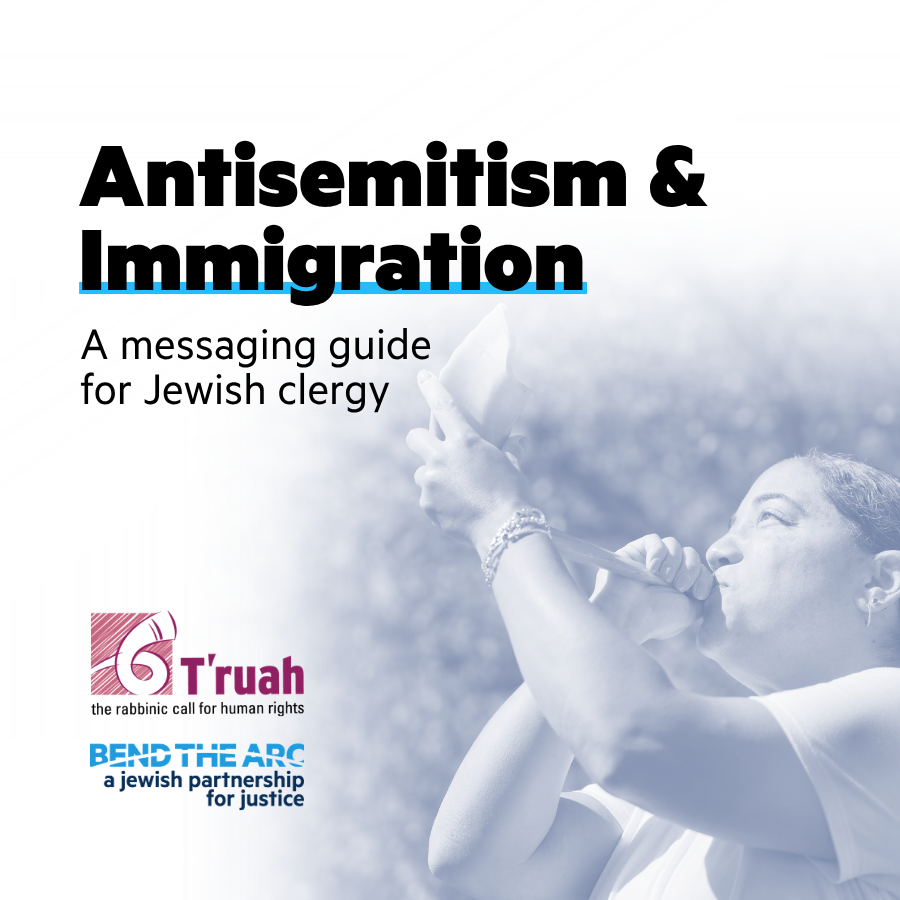
Antisemitism & Immigration: A Messaging Guide for Jewish Clergy
When the fight against antisemitism is used to harm immigrants, rabbis and cantors can be powerful voices to describe what’s at play and advocate for and inspire action towards our shared safety.


Two Decades Later
Two decades later, it is easier to see how we were tempted by the idols of that time, but it is still hard to recognize the idols of today. We remember the sheer panic of 19 years ago, and how we longed for someone — anyone — to make us feel safe again. Those who told us that we need only sacrifice a bit of our liberty for safety often gave us neither. Looking back, we remember just how hollow those promises were.
more
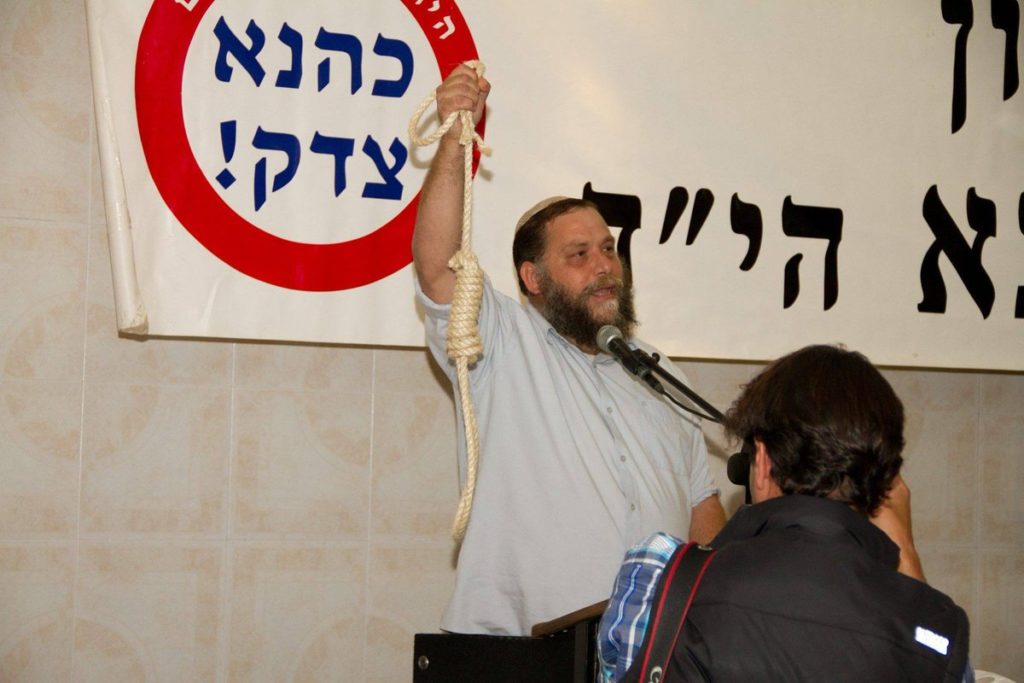
Torah Against Incitement
In December 2015, T’ruah organized Jewish communities and individuals to study this text over Shabbat, as a response to incitement against activists in Israel. It is a talk given by Rabbi Aharon Lichtenstein, Rosh Yeshiva of Yeshivat Har Etzion and a major figure in the Orthodox movement, in the wake of Israeli Prime Minister Yitzhak...
more
Freedom of Speech in Jewish Tradition
Freedom of speech is an ancient Jewish value, as well as a keystone of democracy. Even if we find certain speech distasteful or disruptive, we all lose when we attempt to quash such speech—as long as it does not rise to the level of inciting violence. Boycotts have long been defined as a form of...
more

The Essential Human Right
“Sticks and stones,” the nursery rhyme says, “may break my bones, but words will never hurt me.” The intent of this pithy statement is probably to help children solve disputes with words rather than physical violence. Its message does, however, raise serious doubts. Words can and do hurt us. Words can trivialize, words can insult,...
more

Net Neutrality: The Torah of the Donkey
In this week’s Torah portion, parashat Balak, we read the story of the mighty Moabite king Balak, who wants to hire the prophet Bil’am to curse the children of Israel. Balak places increasing pressure upon Bil’am, first through Moabite and Midianite elders, and then through elite princes. Both times Balak sends esteemed men, but God...
more